
NFPA 25 is an inspection, testing, and maintenance standard, not a visual walkthrough. Contractors stay compliant by knowing the required frequencies, flowing standpipes on the five-year interval, documenting every test, checking piping for obstructions, verifying outlet pressure, correcting deficiencies, and handing the AHJ a complete report. Confirm every interval against the adopted edition.
Keeping fire protection systems ready for real emergencies takes more than simple visual checks. Small mistakes or missed steps can leave your project exposed to costly code violations, or worse, unsafe conditions for building occupants. Staying compliant with NFPA 25 is about protecting lives and meeting strict building requirements. This list shows how to handle inspection, testing, and maintenance so your fire protection systems work when it counts.
1. Understand NFPA 25 Inspection Requirements
The NFPA 25 standard provides critical guidelines for maintaining water-based fire protection systems that every contractor must know and follow precisely (inspection, testing, and maintenance are defined in Chapter 3; the owner duty is NFPA 25 §4.1.1). The same inspect/test/maintain split governs fire sprinkler inspection and testing. At its core, NFPA 25 defines three essential components for keeping a system ready.
- Inspections: a visual examination to verify system operability.
- Testing: physical procedures to confirm system functionality.
- Maintenance: necessary repairs and work to keep equipment ready.
Visual system examinations are not bureaucratic checkboxes but critical safety protocols. They help identify potential failures before they become catastrophic emergencies. Frequencies are not one universal weekly/monthly/quarterly/annual standpipe table; they sit in NFPA 25 Chapters 6, 7, 8, and 13 and must be checked against the NFPA 25 inspection frequencies for the adopted edition.
Proper NFPA 25 inspections can mean the difference between a controlled fire scenario and a potential disaster.
Pro tip: Always maintain detailed digital and physical records of every NFPA 25 inspection to demonstrate compliance and protect your contracting business from potential liability.
2. Schedule Regular Standpipe System Flow Tests
A standpipe flow test is not just a regulatory requirement but a critical safety protocol that ensures your fire protection infrastructure functions exactly when it matters most. These evaluations confirm the system can deliver water at the precise volume and pressure needed during an emergency.
- Verify total flow requirements (NFPA 14 §7.10: commonly 500 gpm plus 250 gpm per additional standpipe, capped at 1,000 gpm for buildings sprinklered throughout and 1,250 gpm if not). Verify against the adopted edition.
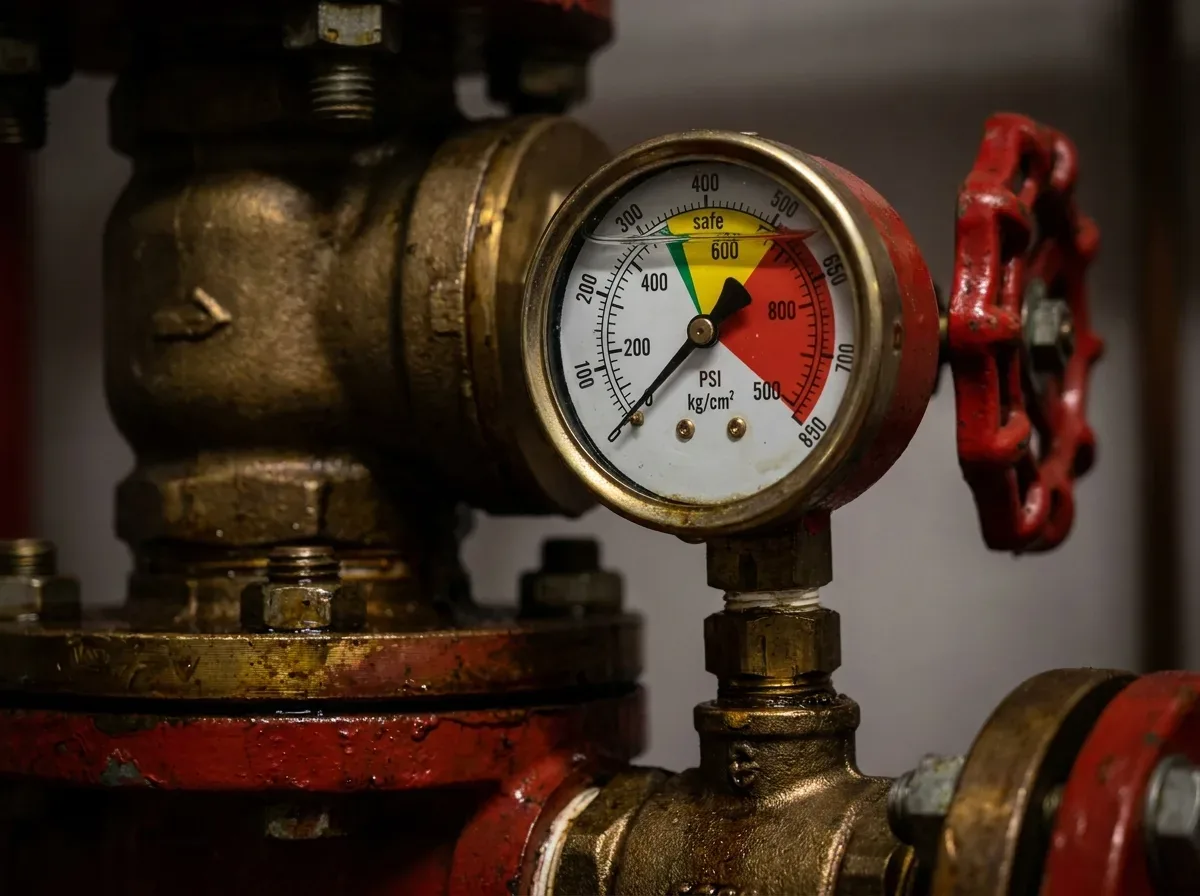
- Confirm minimum residual pressure at the most remote hose connections (NFPA 14 §7.8, commonly 100 psi at the most remote 2½-inch Class I/III outlet). Verify against the adopted edition.
- Test all critical system components simultaneously.
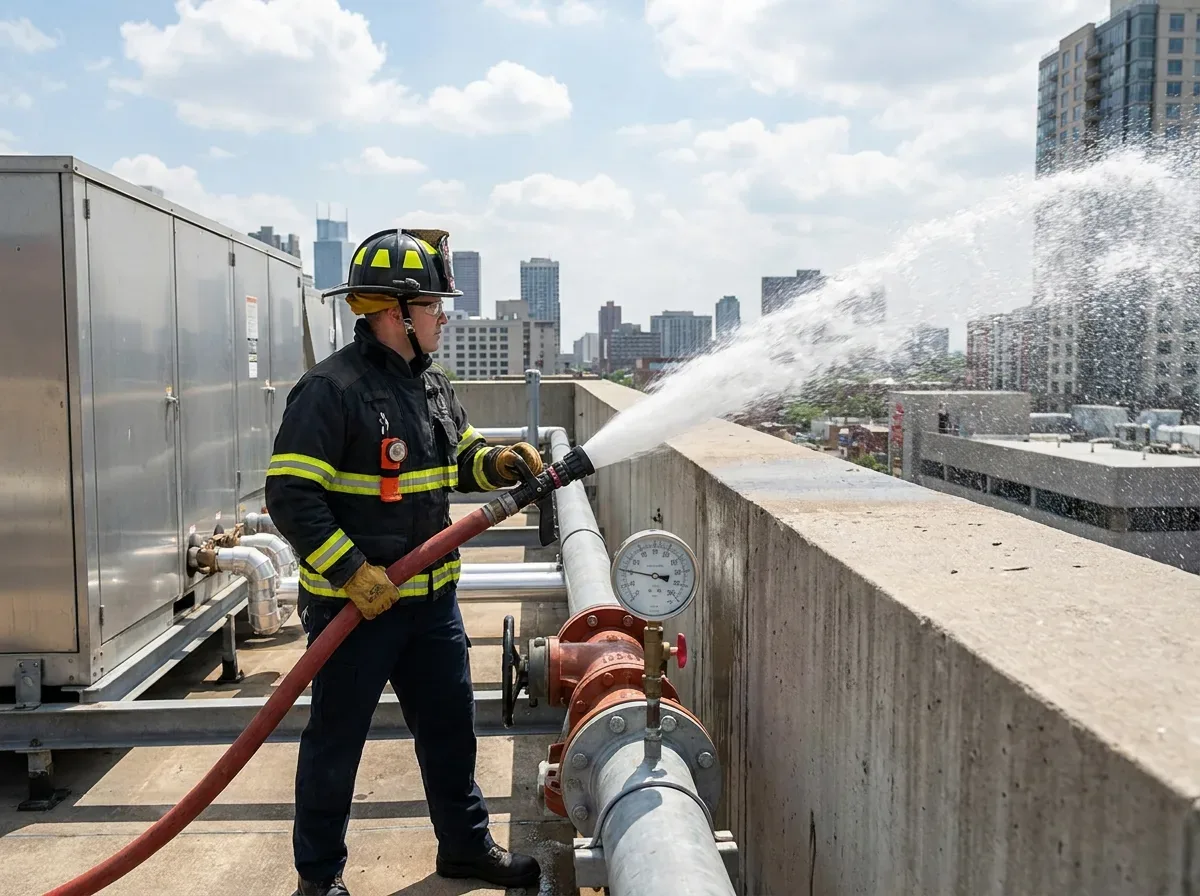
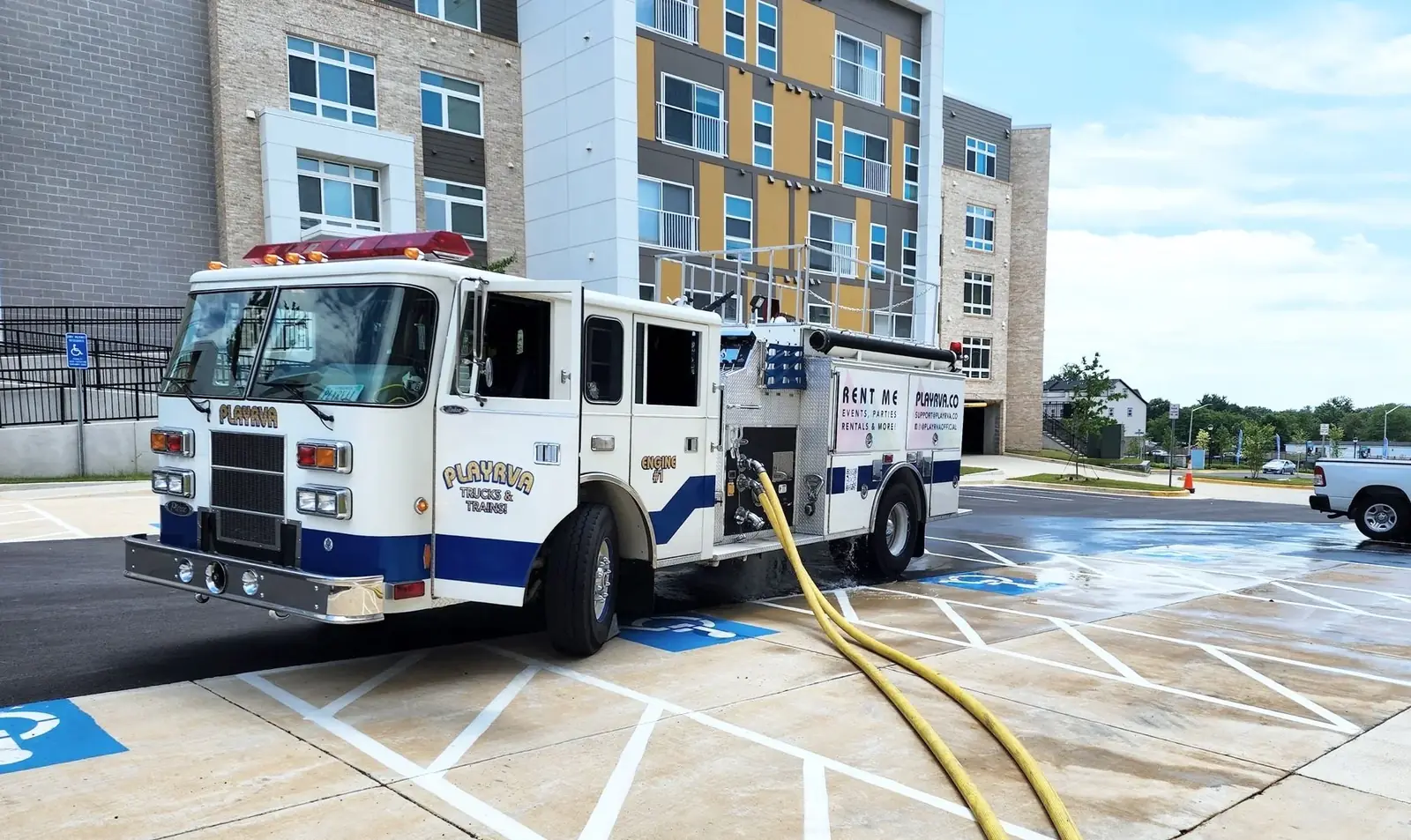
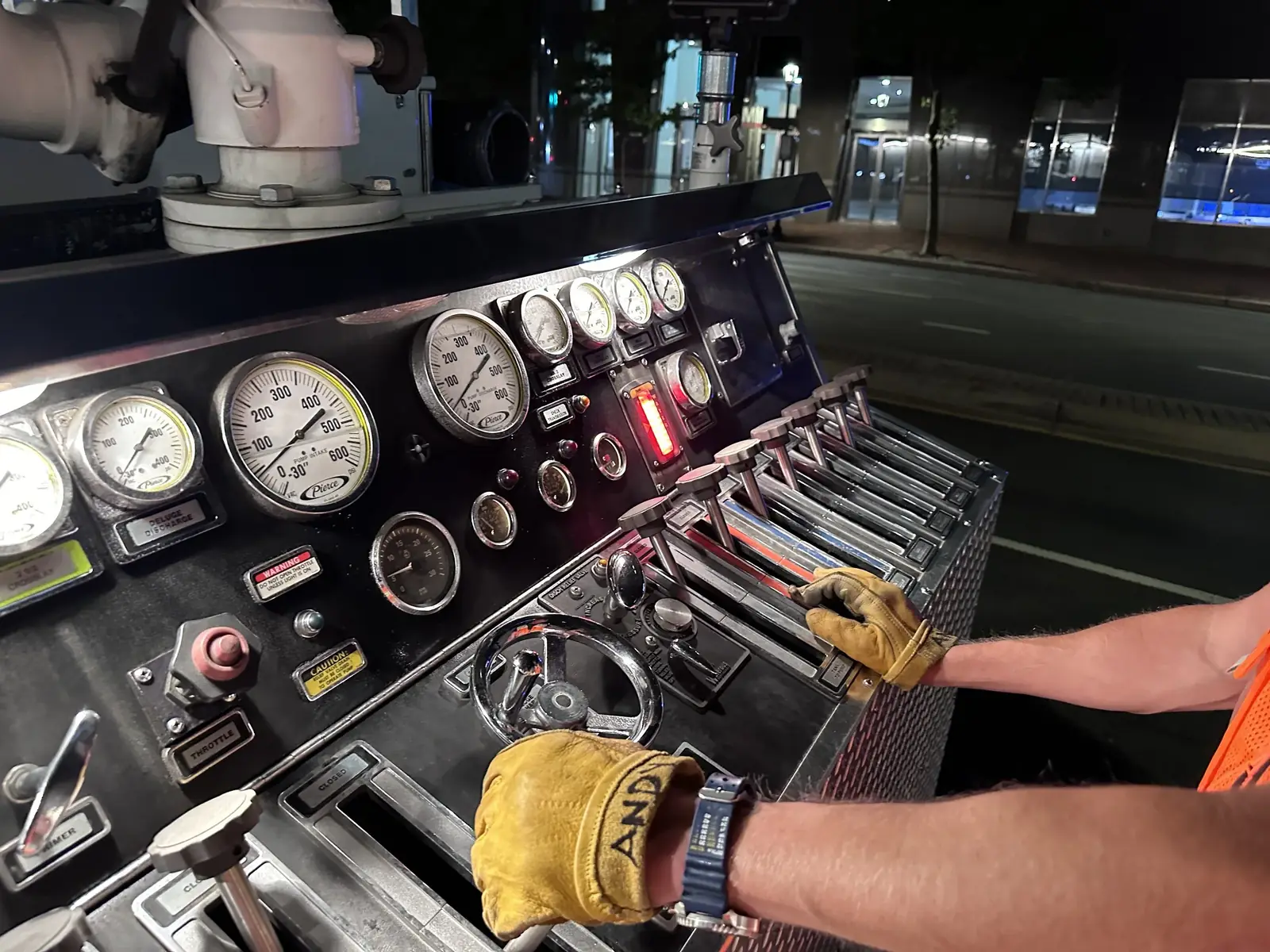
The process means identifying the most hydraulically remote hose connections, setting up calibrated measurement equipment, flowing water from specified valves, recording pressure and flow rates, and documenting the results for compliance (NFPA 25 §6.3.1.1, every 5 years on automatic standpipes). Most manual and semiautomatic-dry standpipes also require hydrostatic testing every five years, typically holding 200 PSI for 2 hours, or 50 PSI above the maximum system pressure (NFPA 25 (2020 edition) §6.3.2.1 / NFPA 14 §11.4.1). Verify against the adopted edition.
Standpipe flow tests are your first line of defense against potential system failures during critical fire scenarios.
Pro tip: Schedule your standpipe flow tests during periods of minimal building occupancy to minimize disruption and ensure a comprehensive evaluation.
3. Document All Testing and Inspection Activities
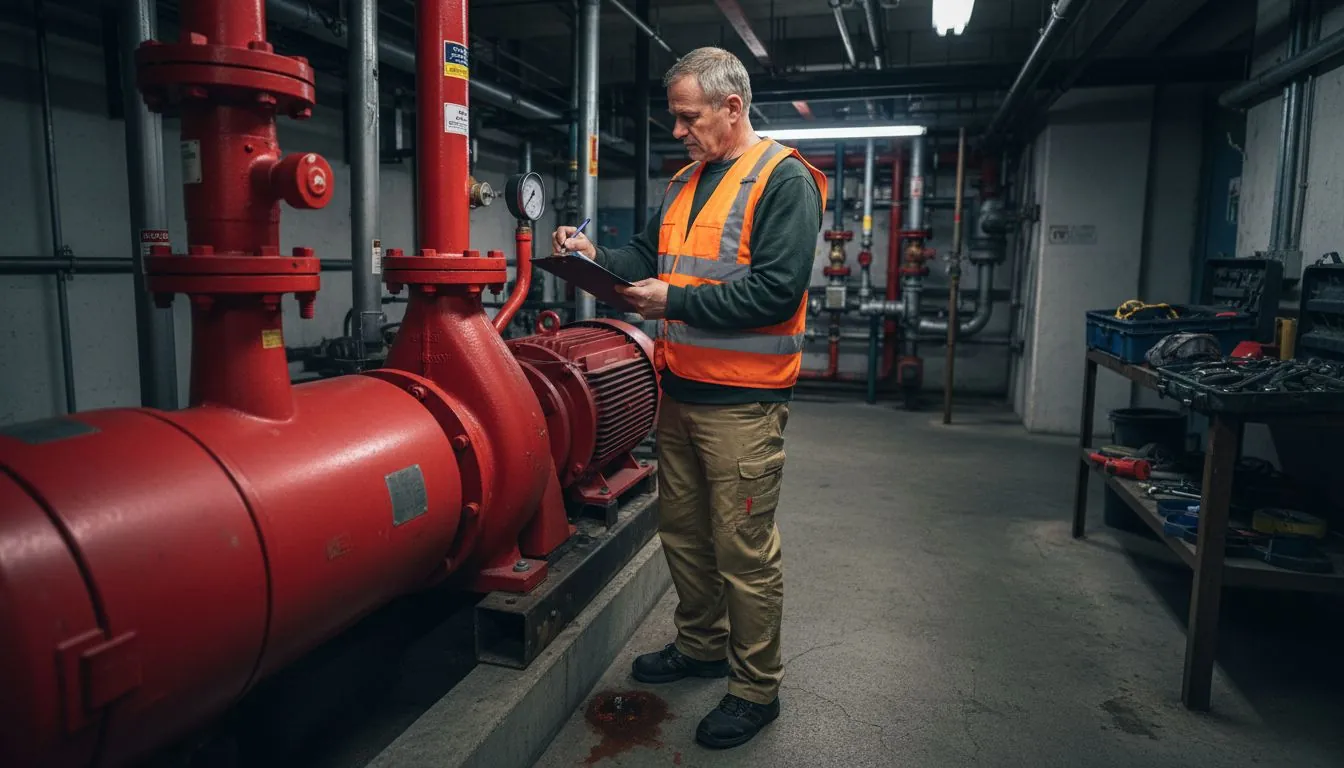
Documentation is the backbone of fire protection system compliance. Without meticulous record keeping, even the most rigorous testing becomes meaningless in the eyes of regulatory authorities. Your records serve as critical evidence of a systematic approach to fire safety management.
- Specific testing procedures performed.
- Date and frequency of each inspection.
- Results of all tests.
- Names of qualified personnel conducting inspections.
- Organization responsible for testing.
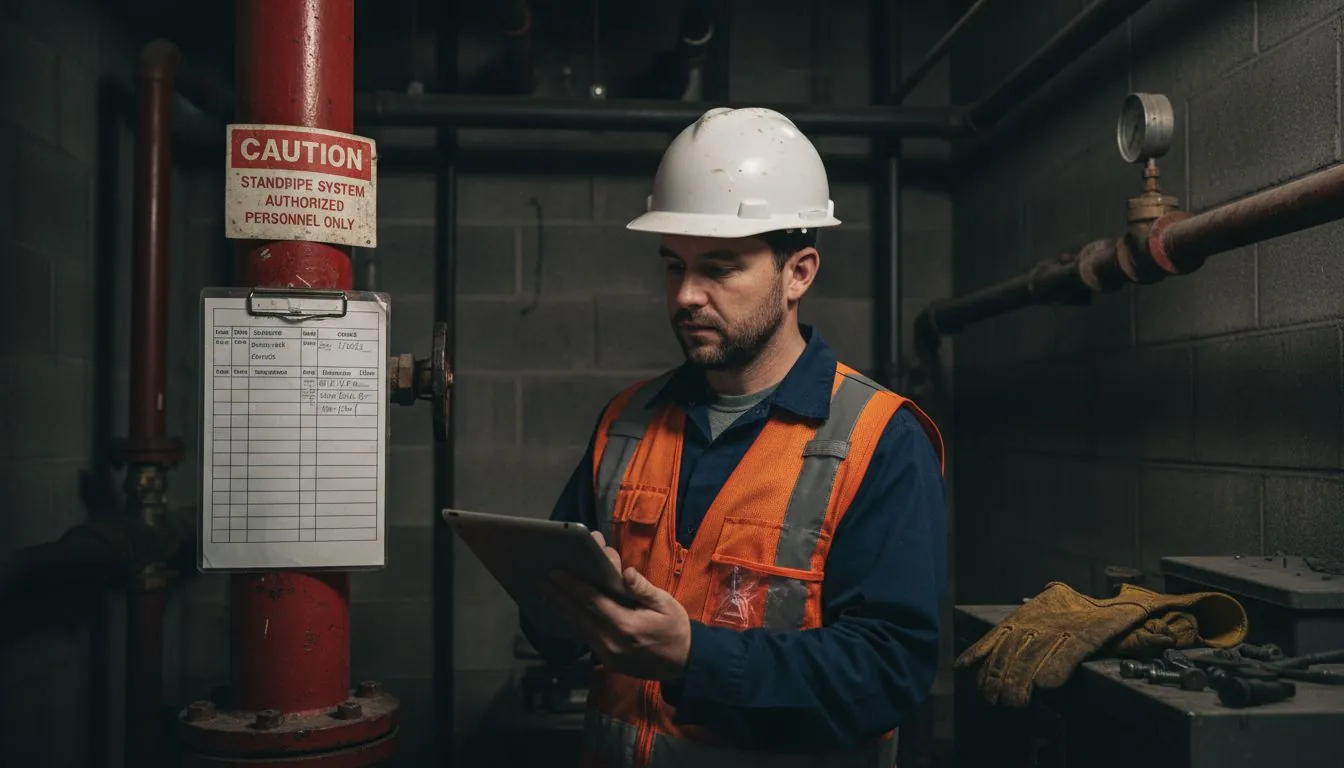
Maintain comprehensive records that can be immediately presented to the authority having jurisdiction, covering initial installation details, every subsequent inspection, maintenance performed, repair history, and component replacements (NFPA 25 §4.3). Digital and cloud-based record keeping offers significant advantages over paper systems, a theme we expand on in Insurance Won't Cover What You Didn't Maintain.
Accurate documentation protects your business and potentially saves lives by ensuring system readiness.
Pro tip: Implement a standardized digital template for inspection reports to ensure consistent, comprehensive documentation across every project.
4. Check for Obstructions and Pipe Integrity
Pipe integrity is the silent guardian of fire protection systems. Undetected obstructions can transform a reliable safety network into a catastrophic failure point during an emergency. NFPA 25 mandates rigorous internal pipe assessments every five years (NFPA 25 §14.2.1) to prevent systemic blockages that compromise water flow. The every-other-system allowance in §14.2.2 applies to multiple wet-pipe sprinkler systems, not as a blanket standpipe exemption.
- Corrosion buildup.
- Mineral scale deposits.
- Biological growth.
- Debris accumulation.
- Mechanical deformations.
Schedule periodic internal inspections, use advanced diagnostic technologies, document all findings, develop targeted remediation plans, and verify restoration of full system capacity. Different materials require different approaches, non-metallic pipes like CPVC need specialized techniques. Construction debris is exactly what a trip test and pipe flushing is designed to clear.
A single undetected pipe obstruction can render an entire fire suppression system ineffective.
Pro tip: Invest in ultrasonic testing and borescope technologies to conduct non-invasive internal pipe assessments that reveal hidden obstructions without extensive disassembly.
5. Verify Pressure and Flow at All Outlets
Ensuring optimal water pressure and flow at every outlet is a critical safety protocol that can mean the difference between effective fire suppression and catastrophic system failure. The water supply behind the system matters just as much, which is why a fire hydrant flow test often runs alongside outlet verification.
- Measuring residual pressure at each outlet.
- Checking control valve functionality.
- Evaluating water delivery capabilities.
- Identifying potential system weaknesses.
- Documenting precise performance metrics.
Execute systematic verification through calibrated pressure gauge readings, dynamic flow testing, outlet-by-outlet assessments, detailed documentation, and immediate remediation of any issues. Professional contractors go beyond surface-level inspections to truly validate system readiness.
A single compromised outlet can undermine the entire fire protection infrastructure.
Pro tip: Invest in digital pressure monitoring equipment that provides real-time data and flags performance variations immediately.
6. Address Deficiencies Immediately and Correctly
In fire protection systems, deficiencies are not administrative footnotes but potential life-threatening vulnerabilities that demand immediate, precise intervention. NFPA 25 classifies deficiencies and impairments in Chapter 3 and requires impairment procedures in Chapter 15. Definition numbers move between editions, so verify the terms in the adopted edition.
- Noncritical: minor issues requiring correction.
- Critical: significant performance impediments.
- Impairments: complete system functional breakdown.
Implement a systematic approach: conduct thorough initial assessments, categorize deficiencies accurately, develop immediate remediation strategies, document all findings and corrections, and verify complete system restoration. Rapid response protocols keep minor issues from escalating into major failures.
One overlooked deficiency can compromise an entire fire protection infrastructure.
Pro tip: Create a standardized digital tracking system for deficiencies that allows real-time monitoring, prioritization, and instant reporting to streamline your correction workflow.
7. Prepare for Code Inspections with Detailed Reports
Code inspections represent the ultimate test of your system's compliance and reliability. Comprehensive documentation is your most powerful tool in demonstrating readiness and professionalism. NFPA 25 §4.3 mandates meticulous record keeping that turns documentation into a strategic asset.
- Complete inspection dates and times.
- Names of qualified personnel.
- Specific testing procedures performed.
- Detailed system performance results.
- Identification of any deficiencies.
- Corrective actions taken.
Develop a systematic approach to reporting: create standardized digital templates, capture real-time testing data, include photographic evidence where possible, annotate findings thoroughly, and maintain accessible digital and physical records.
Your documentation is your defense against potential compliance challenges.
Pro tip: Invest in cloud-based documentation software that automatically timestamps and secures your inspection records to streamline AHJ compliance processes.
Ensure NFPA 25 Compliance with Expert Flow Testing
The challenges contractors face in following NFPA 25 best practices are clear, from scheduling timely inspections to verifying pressure and flow across all outlets, the margin for error is slim. Precise flow testing and pressure verification are critical to meeting these standards. We specialize in on-demand standpipe flow tests, hydrostatic pressure tests, and pipe flushing built around NFPA 25 and NFPA 14 compliance.
Don't let gaps in testing and documentation hold your projects back. If you're a contractor or developer, request a quote and we'll tell you exactly what your system needs and when it's due.
Sources
- NFPA 25, Standard for the Inspection, Testing, and Maintenance of Water-Based Fire Protection Systems, 2020 edition (enforced in Virginia via 2021 SFPC Ch. 80). National Fire Protection Association. https://www.nfpa.org/codes-and-standards/nfpa-25-standard-development/25
- 2021 Virginia Statewide Fire Prevention Code (2021 IFC as amended), Chapter 80 Referenced Standards. UpCodes. https://up.codes/viewer/virginia/ifc-2021/chapter/80/referenced-standards
- Inspection, Testing and Maintenance Records guidance. Fairfax County Fire Marshal. https://www.fairfaxcounty.gov/fire-ems/sites/fire-ems/files/Assets/Documents/PDF/fire%20marshal/LTI%20Inspection%20Testing%20and%20Maintenance%20Records.pdf
- NFPA Free Access (read-only codes and standards). National Fire Protection Association. https://www.nfpa.org/for-professionals/codes-and-standards/list-of-codes-and-standards/free-access