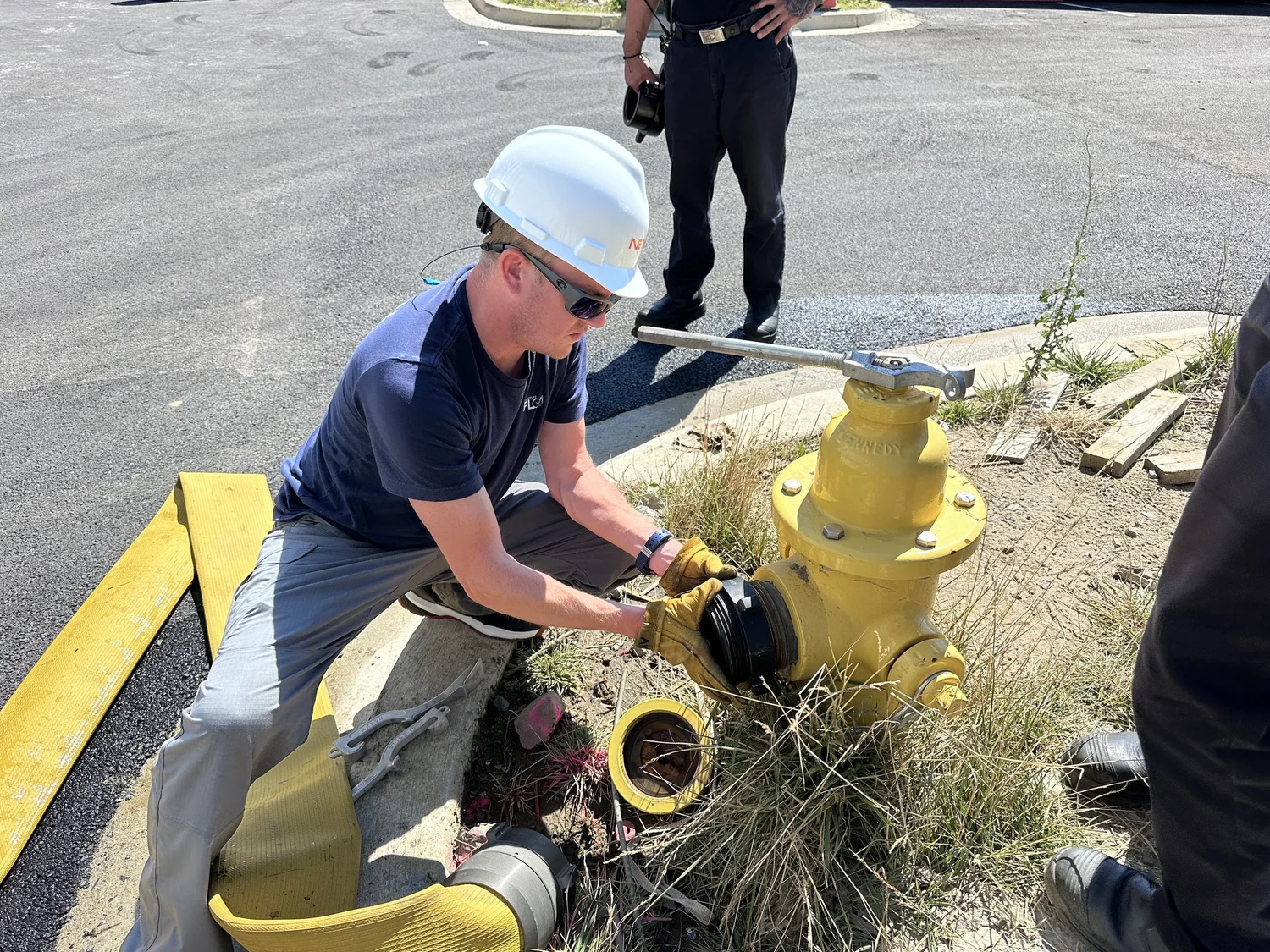
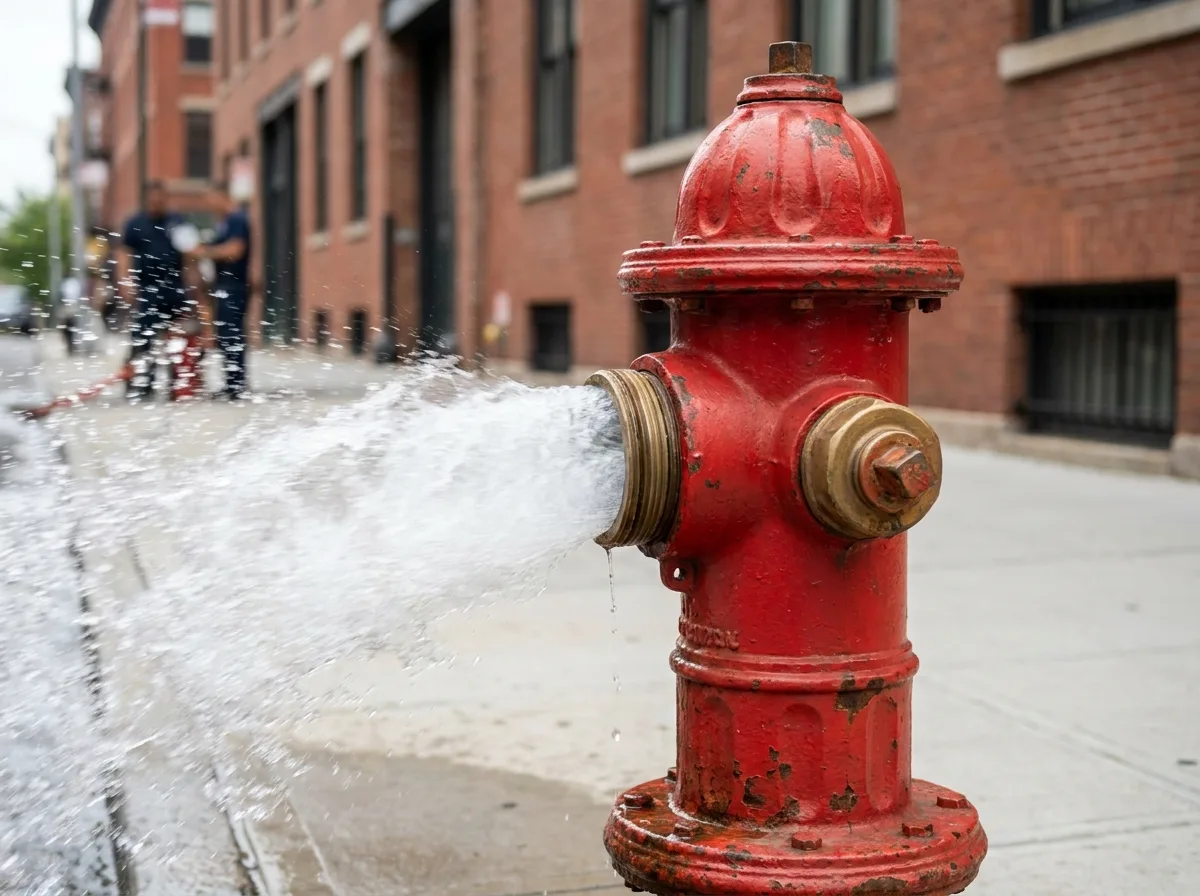
Hydrant bonnets are painted for a reason. Under NFPA 291, the color communicates the hydrant's rated flow capacity at 20 PSI residual pressure so an arriving crew knows what they are connecting to. Here is what each color means and why it is not a substitute for a current fire hydrant flow test. More answers in the Fire Hydrant Flow Testing FAQ.
The four classes
- Light blue (Class AA): 1,500 GPM or greater.
- Green (Class A): 1,000 to 1,499 GPM.
- Orange (Class B): 500 to 999 GPM.
- Red (Class C): less than 500 GPM.
The barrel itself is typically chrome yellow for public hydrants, with the bonnet and caps carrying the classification color. Private hydrants on a property are often painted differently by local convention, which is one reason the paint alone is unreliable.
How the class gets assigned
The classification comes from a flow test: static pressure, residual pressure under flow, and pitot readings feed a calculation of available flow at 20 PSI residual. That is exactly the data a hydrant flow test produces, and exactly what an engineer needs for sprinkler hydraulic calculations.
The color tells you what the hydrant could do the day someone tested it. Only a current test tells you what it can do today.
Why the paint goes stale
Water systems change. New development taps the same main, mains tuberculate and narrow, utilities re-zone pressures, and repairs re-route flow. A green bonnet painted twelve years ago may be an orange hydrant today and nobody repainted it. We explain the shelf life of supply data in Hydrant Flow Test Data Is Perishable.
This matters most for design. Plan reviewers and engineering firms generally expect flow data no older than 6 to 12 months for hydraulic calculations. Designing off a bonnet color is not a defensible position.
What we deliver instead
- Static pressure at the residual hydrant.
- Residual pressure while flowing.
- Pitot readings and measured GPM at the flow hydrant.
- Calculated available flow at 20 PSI residual, the number your calculations need.
- A signed report with date, location, and conditions.
That same supply feeds your standpipe system, so the data does double duty on buildings with both. Annual hydrant flushing keeps sediment from skewing it, which we cover in The Importance of Flushing Fire Hydrants and Standpipe Systems.
Bottom line
Read the color for a quick field impression. Order a flow test before you design, build, or certify anything. Request a quote and we will get you current numbers fast.