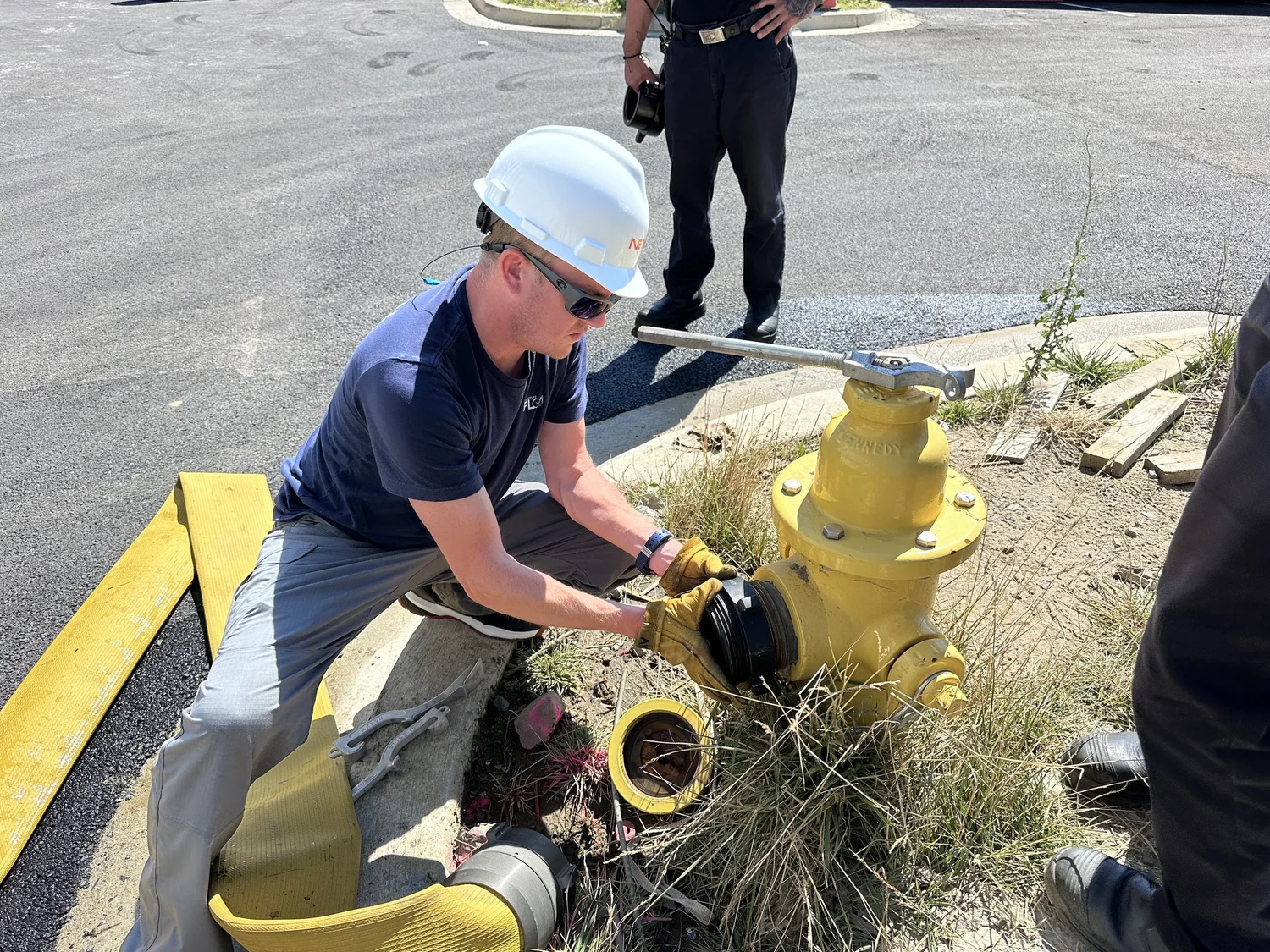
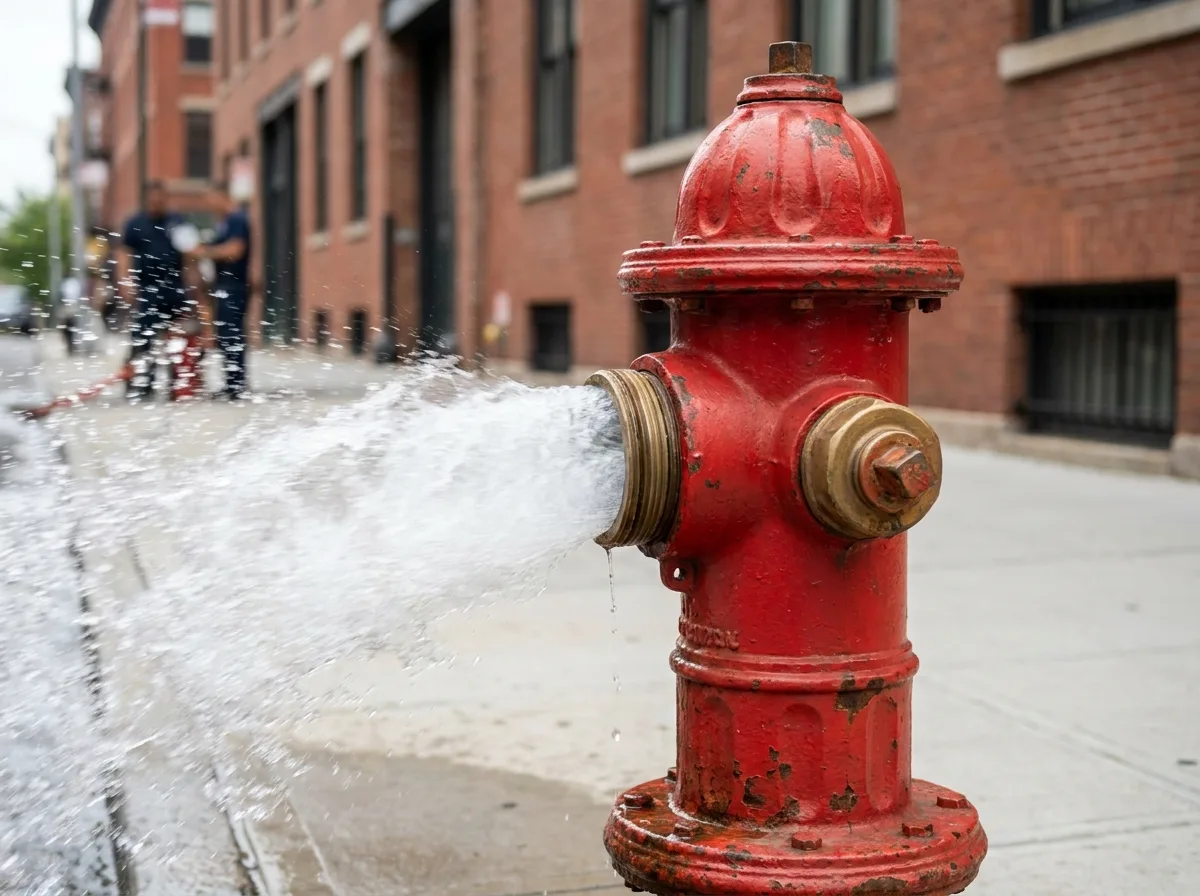
Every fire sprinkler hydraulic calculation starts with one number: how much water the municipal supply can deliver. That number comes from a fire hydrant flow test, the pitot-to-GPM math behind it is in our hydrant flow test calculator. And here is the part that gets engineers and owners in trouble, that number does not stay true forever. This article explains why hydrant data expires, how fresh it needs to be, and what a stale flow curve can do to a sprinkler design.
Why water supply changes over time
Municipal water systems are living infrastructure. Pressures and available flow shift for a dozen reasons that have nothing to do with your building:
- New developments tapping the same main reduce available flow.
- Water main breaks, repairs, and re-routing change the network.
- Tuberculation and corrosion narrow older cast-iron mains over time.
- Utility pressure-zone adjustments and pump station changes.
- Seasonal demand swings, especially in growing or agricultural areas.
A flow test captures a snapshot. Five years later, that snapshot may describe a water system that no longer exists. The static and residual pressures you build a design around can quietly drift below what the hazard requires.
The danger of stale data
Designing a sprinkler system off 5-year-old hydrant data is like setting a thermostat based on last summer's weather. It might be close. It might be dangerously wrong.
If the original test reported higher flow than what is actually available today, the sprinkler design built on it is undersized. In a fire, the system may not deliver the density the hazard requires. That is a life-safety failure that traces directly back to a number that was simply too old to trust, and it often does not surface until acceptance testing at the end of a project. We put real numbers to that scenario in The Hidden Cost of a Failed Flow Test at CO.
How fresh does the data need to be?
Industry best practice, and the expectation of most plan reviewers, is that hydrant flow test data used for hydraulic calculations should be no more than 6 to 12 months old at the time of design. Many AHJs will reject calculations based on data older than a year. For any active design project, plan on a fresh flow test rather than digging up an old report.
For existing buildings, periodic retesting (typically annually as part of NFPA 25 hydrant maintenance, NFPA 25 §7.3.2) keeps you aware of degrading supply before it becomes a surprise during your next renovation or tenant fit-out. The same water supply feeds your standpipe system, so fresh data protects more than just the sprinklers.
Who should care most
Engineering firms carry the professional liability for the calculations, so current data is non-negotiable for them. Contractors and developers own the schedule risk if a design built on stale numbers fails at the finish line. And property owners inherit any undersized system for the life of the building. Everyone in that chain benefits from insisting on a current test.
The practical takeaway
If you are an engineer specifying a system, insist on current flow data. If you are an owner or contractor, budget for a fresh hydrant flow test at the start of design rather than assuming the last one still holds. A flow test is a small, fast cost. Re-engineering a rejected or undersized system is not. Get in touch and we can turn around the data your calculations actually need.