Yes, NFPA 25 requires a flow test every five years on automatic standpipe systems to confirm required flow and pressure at the hydraulically most remote hose valve under demand. Commercial and multi-family buildings rely on that test to prove firefighters will have water. Dry and manual systems also carry a five-year hydrostatic test. Verify against the adopted edition.
Ensuring the safety and compliance of your commercial property or multi-family residential building is paramount. One critical aspect of this responsibility is the regular maintenance and testing of your standpipe system, specifically the five-year standpipe flow test. This test is not only a regulatory requirement but also a vital measure to ensure the system's functionality during emergencies. For the broader case behind proactive testing, start with Why Test.
Understanding Standpipe Systems
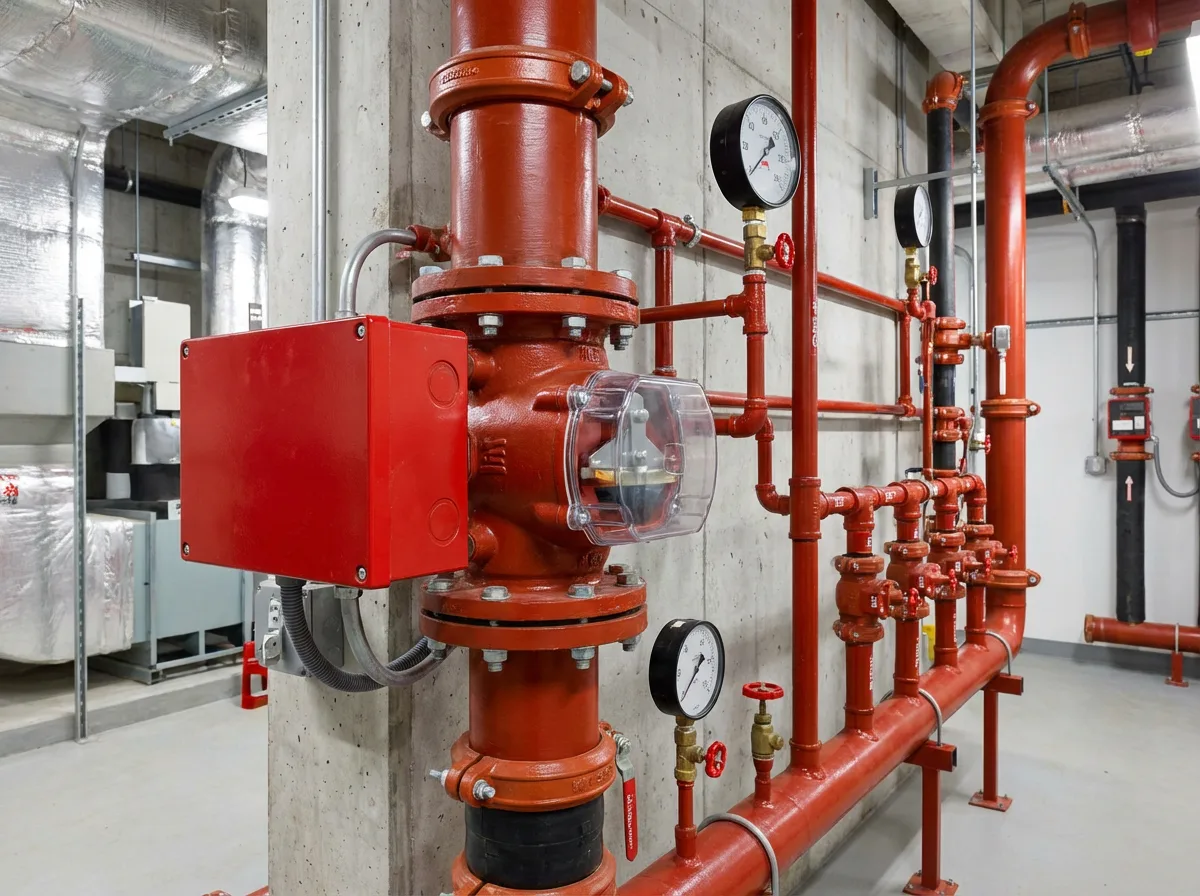
Standpipe systems are an integral component of a building's fire protection infrastructure. They consist of a network of pipes designed to provide water to various parts of a building during a fire. Essentially, they serve as indoor fire hydrants, allowing firefighters to access water quickly and efficiently, especially in large or multi-story buildings. These systems are categorized into different classes based on their design and intended use:
- Class I: equipped with 2½-inch hose connections intended for use by trained firefighters (NFPA 14 §5.3).
- Class II: features 1½-inch hose stations designed for use by building occupants (NFPA 14 §5.3).
- Class III: combines features of both Class I and Class II systems, providing 1½-inch hose stations for occupant use and 2½-inch hose connections for firefighters (NFPA 14 §5.3).
The design and installation of these systems are governed by standards such as NFPA 14, which outlines the requirements for standpipe and hose systems, a requirement we decode in NFPA 14 Standpipe Testing Requirements.
The Five-Year Flow Test: What Is It?

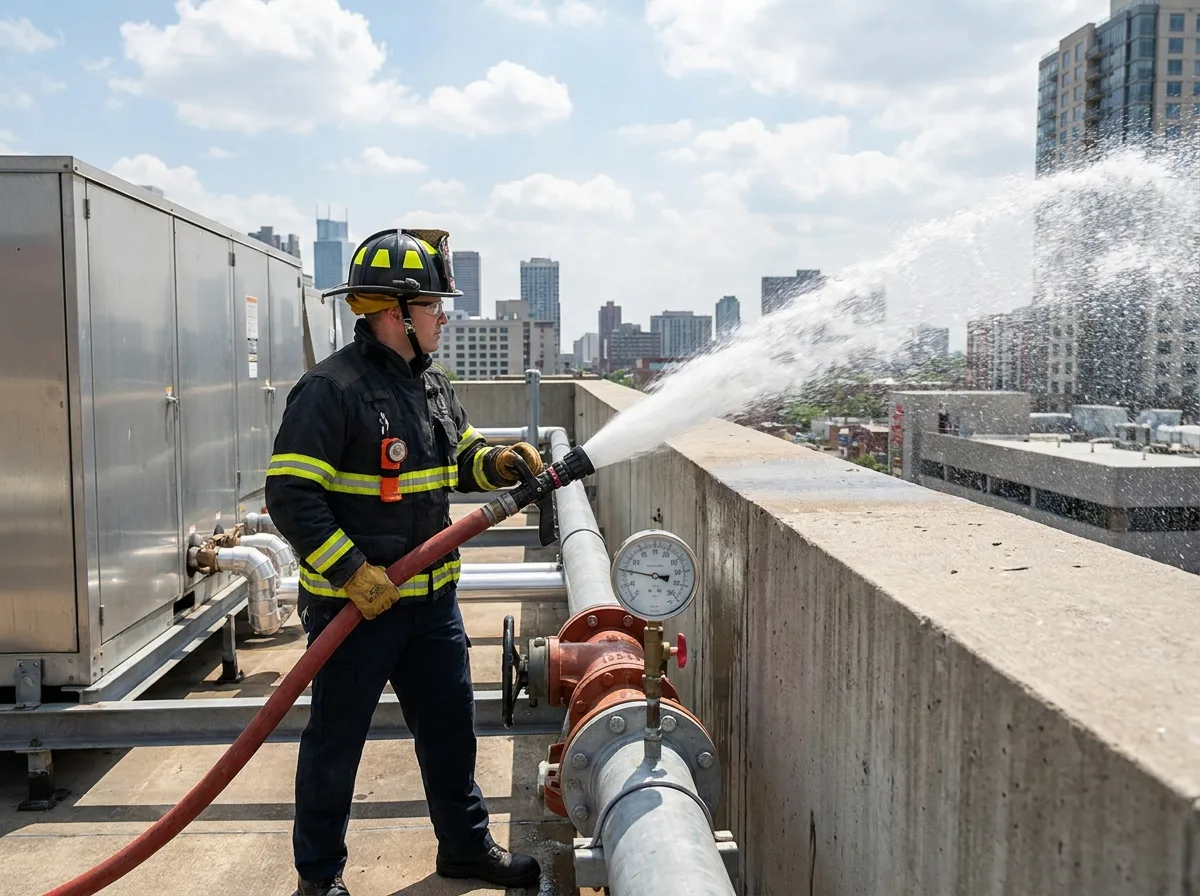
The five-year flow test is a comprehensive evaluation conducted every five years on automatic standpipe systems. Its primary purpose is to verify that the system can deliver the required water flow and pressure at the hydraulically most remote hose valve outlet(s) while the system is operating under demand conditions. This ensures that, in the event of a fire, the standpipe system will function as intended, providing adequate water flow and pressure to suppress or extinguish the fire.
Regulatory Requirements
Compliance with the five-year flow test is mandated by various fire safety codes and standards. For instance, **NFPA 25**, the Standard for the Inspection, Testing, and Maintenance of Water-Based Fire Protection Systems, specifies that a flow test must be conducted every five years on all automatic standpipe systems (NFPA 25 §6.3.1.1). The test aims to verify that the required flow and pressure are available at the hydraulically most remote hose valve outlet(s) while the system is under demand. The same standard drives the hydrostatic pressure tests (NFPA 25 §6.3.2.1, on manual and semiautomatic-dry standpipes) and trip tests and pipe flushing (NFPA 25 §13.4.5.2.2 in the 2023 edition; older editions use §13.4.4.2.2) that round out a complete maintenance program. Confirm every interval against the NFPA 25 inspection frequencies for the edition your AHJ has adopted.
Additionally, local authorities having jurisdiction (AHJs) may have specific requirements or interpretations regarding the testing procedures. It's essential to consult with them to ensure full compliance with all applicable regulations. In Virginia, the installation side flows through the building code, we break that down in Virginia USBC Section 905.2.
Importance of the Five-Year Flow Test
- Ensuring system performance: over time, standpipe systems can experience issues such as corrosion, sediment buildup, or mechanical wear, which can impede water flow or reduce pressure. The five-year flow test helps identify and address these issues, ensuring the system performs optimally during an emergency.
- Life safety: in a fire emergency, the effectiveness of the standpipe system can be the difference between a controlled situation and a catastrophic event. Regular testing ensures firefighters have reliable access to the water supply they need, enhancing the safety of building occupants.
- Legal and insurance compliance: failure to conduct the mandated five-year flow test can result in non-compliance with fire safety codes, potentially leading to legal penalties and issues with insurance coverage. Regular testing demonstrates due diligence and adherence to safety standards.
- Early detection of issues: regular testing can uncover hidden problems within the system, such as valve failures, blockages, or pressure deficiencies, allowing for timely repairs before a failure occurs during an actual emergency.
That insurance point is the one owners underestimate. We break down exactly how a missing test report turns a covered loss into a denied claim in Insurance Won't Cover What You Didn't Maintain.

A flow test is the only thing that proves your standpipe will actually deliver water at the right pressure when a firefighter opens a valve, five years is plenty of time for a system to quietly stop being able to.
Conducting the Test
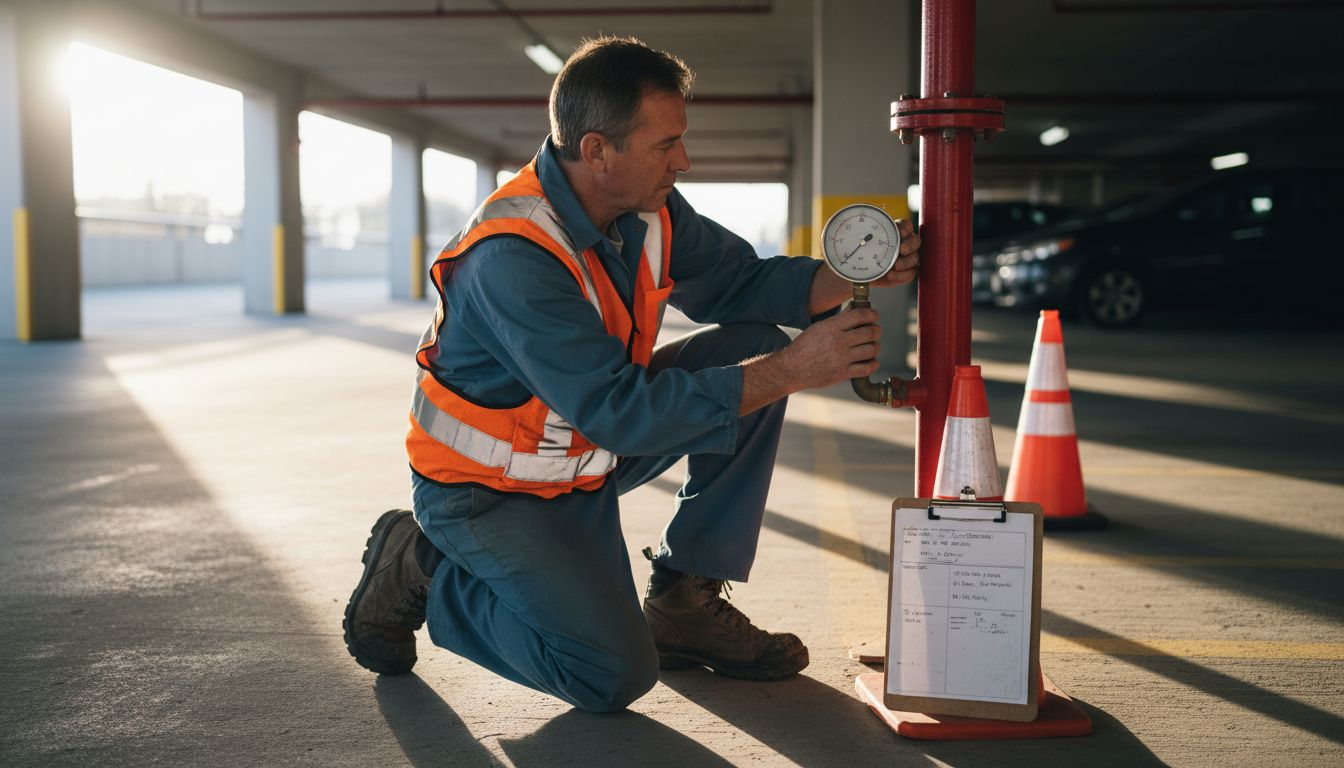
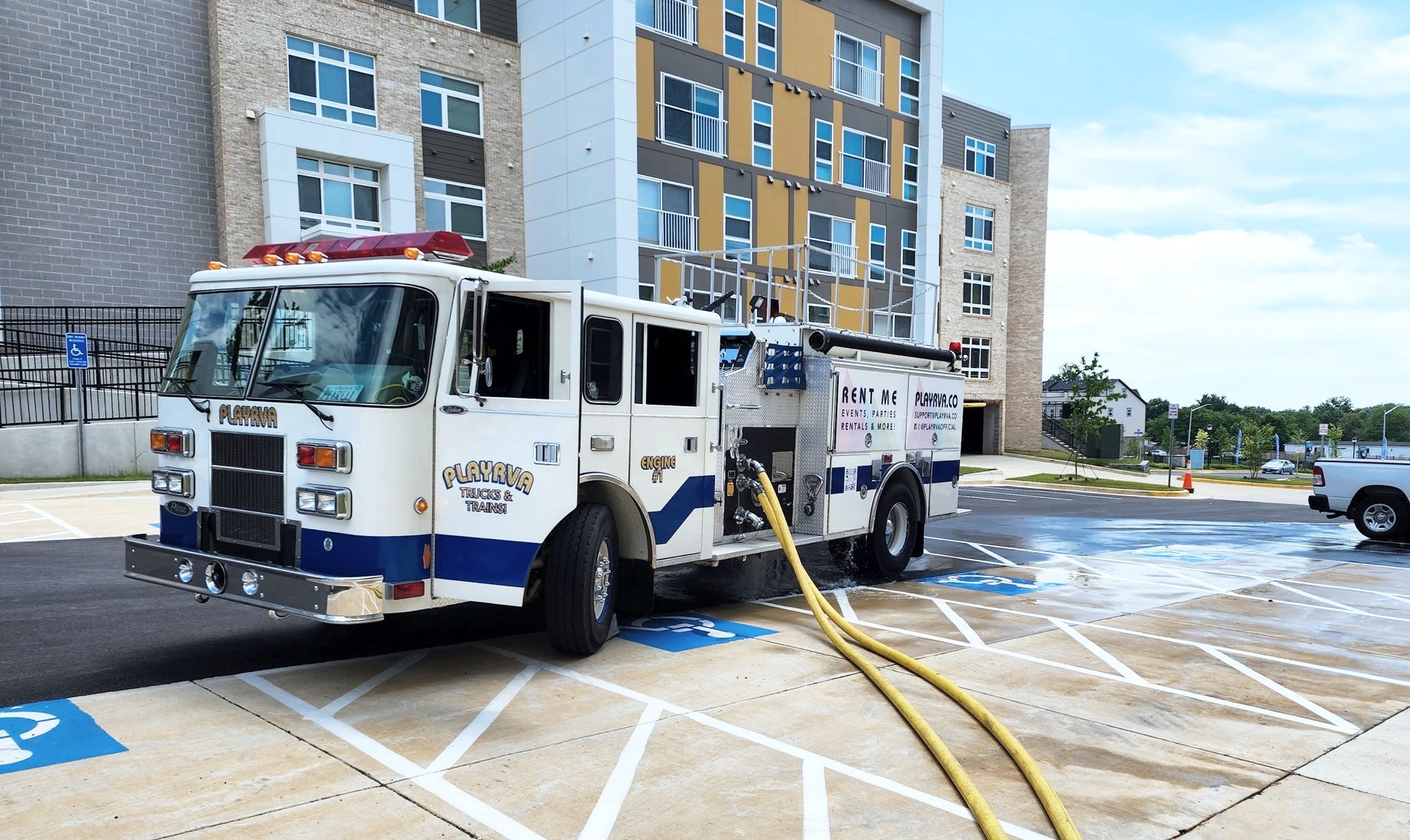
The five-year standpipe flow test should be performed by qualified fire protection professionals who have the expertise and equipment to conduct the test safely and accurately. The process involves flowing water through the system to simulate emergency conditions and measuring the pressure and flow rates at various points, particularly at the most remote hose connections. This helps ensure that the system can deliver the necessary water flow and pressure throughout the building. The property owner or designated representative is responsible for getting it done (NFPA 25 §4.1.1). The water supply behind the system matters too, which is why a fire hydrant flow test is often run alongside standpipe testing on larger projects.
Conclusion
Regular maintenance and testing of standpipe systems, particularly the five-year flow test, are critical components of a comprehensive fire protection strategy for commercial properties and multi-family residential buildings. By ensuring these systems are functioning correctly, building owners and managers can provide a safer environment for occupants, comply with regulatory requirements, and mitigate potential legal and financial risks. We support property owners and managers, contractors and developers, and fire protection firms every step of the way.
Contact FLOW today to schedule your test, request a quote or get in touch and we'll tell you exactly what your system needs and when it's due.