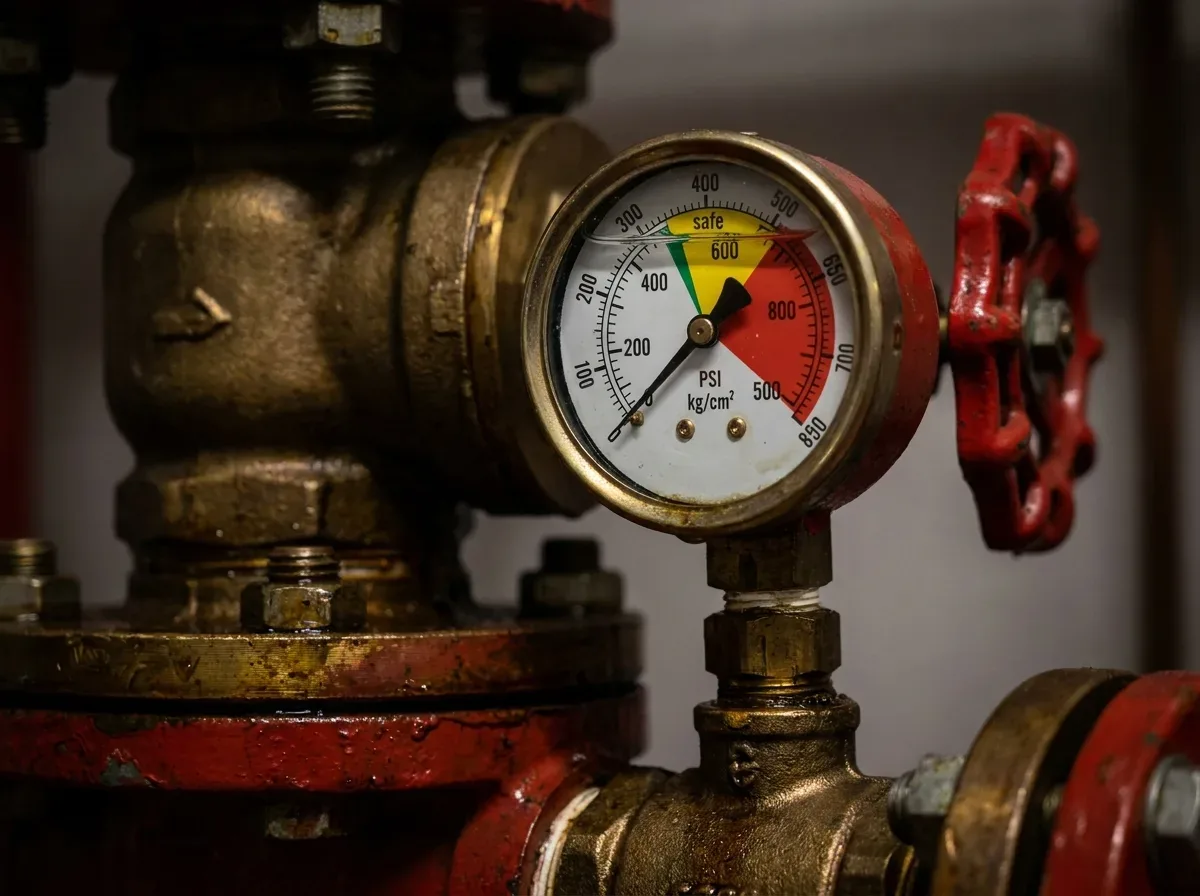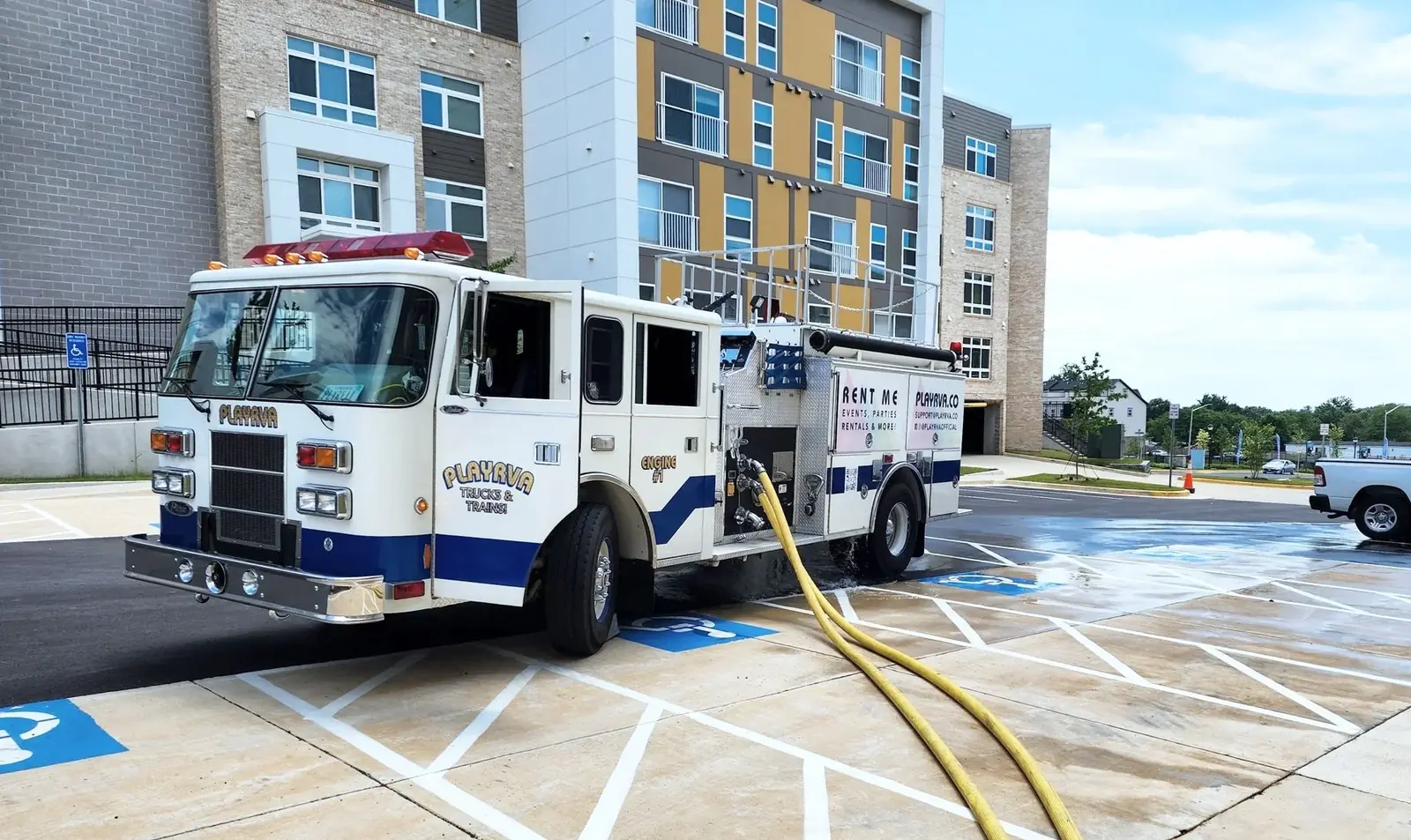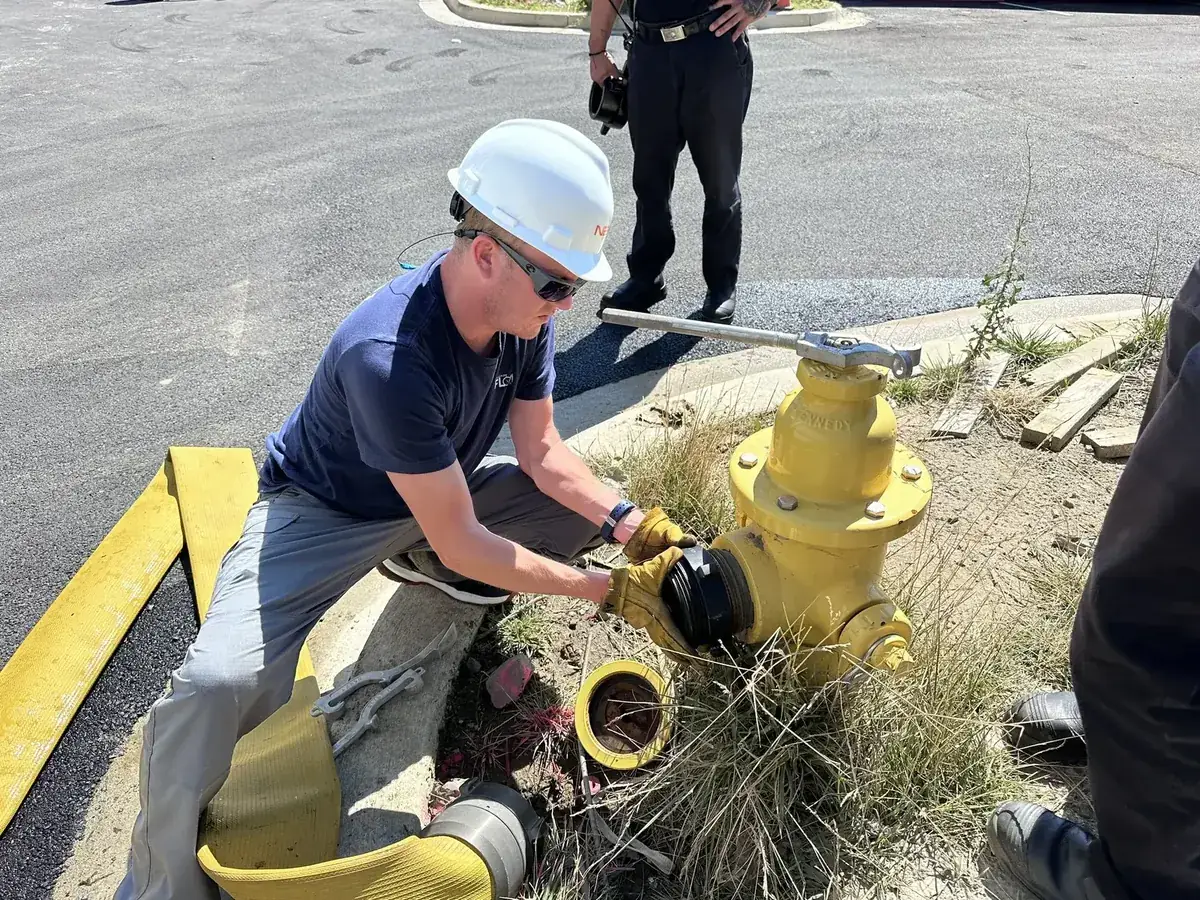

FLOW does not work on sprinkler systems. We support sprinkler and fire-protection contractors on the water side. That covers hydrant flow tests for static, residual and flow data, standpipe flow and hydrostatic tests, fire pump flow tests, in-service tank inspections by an underwater submersible drone (ROVr) with the tank kept full, and hydrant-direct bulk water for pool fills, across VA, MD, DC, NC and SC.
What contractors need from the water side
Most sprinkler jobs depend on things outside the sprinkler scope: how much water the supply delivers and at what pressure, whether the standpipe and pump perform, and what condition the tank is in. These pieces sit upstream of your system, and they often fall between trades.
That's the work FLOW does. We don't design, install, inspect, test or repair sprinkler systems. That scope stays with you. We do the water-side work, so you can focus on your system with good data in hand.
Hydrant flow test data for design and hydraulic calculations
A hydrant flow test measures what the municipal supply can deliver at a given location. You get three core numbers:
- Static pressure: the pressure in the main with no flow.
- Residual pressure: the pressure at a test hydrant while water flows from one or more flow hydrants.
- Flow: the measured gallons per minute at the flow hydrant(s) at that residual pressure.
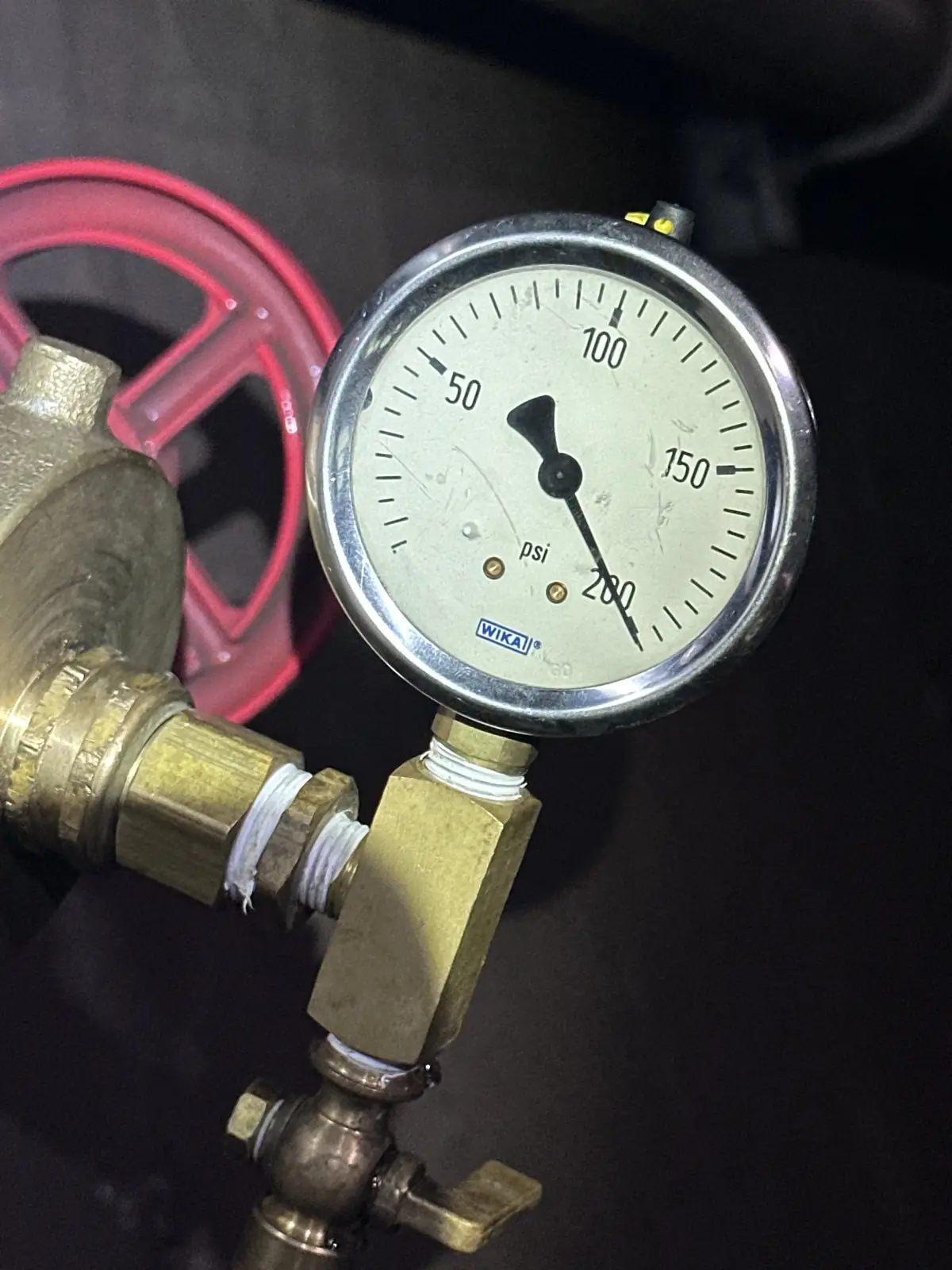
These points define a supply curve that designers use in hydraulic calculations. We follow the NFPA 291 test method and record the hydrants, locations, date and time, and conditions, so your designer knows where the numbers came from.
Some practical notes:
- Coordinate with the water utility early. Many utilities have their own process for permission, notification or witnessing a hydrant flow.
- Supply data reflects conditions at the time of the test. Ask your AHJ or the utility how recent the data should be for a submittal.
- To check a number or project the supply at a different pressure, try our hydrant flow test calculator.
Standpipe flow tests and hydrostatic tests
Standpipes often share a building, a riser room or a project schedule with sprinkler work. That's why contractors and owners ask us to handle them. We perform standpipe flow tests to check flow and pressure at the hose connections, and hydrostatic tests to check that piping holds pressure for the test duration.
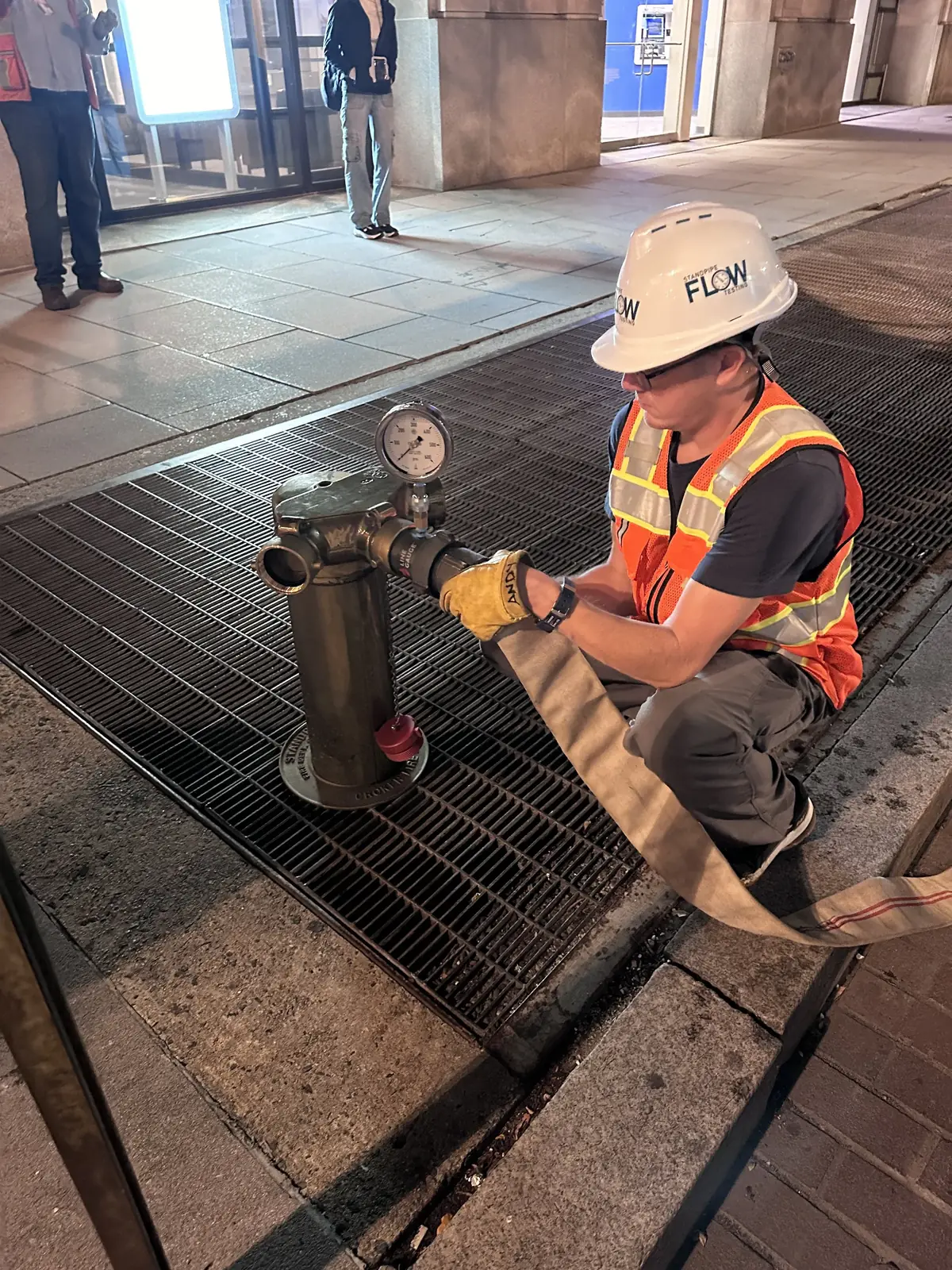
The relevant standards are NFPA 14 for standpipe installation and NFPA 25 for inspection, testing and maintenance of existing systems. Virginia currently uses NFPA 14-2019 and NFPA 25-2020. Confirm the adopted edition of each standard with your AHJ, since it varies by jurisdiction and changes over time. See our NFPA 25 overview for background.
Fire pump flow tests
When a building relies on a fire pump, its performance affects the whole water side. We run fire pump flow tests that record flow and pressure at test points, so the owner, the AHJ and your team can compare the results to the pump's rated performance. If you're tying new work into a building with a pump, current pump data helps your design and planning.
We test the pump's water-side performance. Sprinkler system work remains with the sprinkler contractor.
In-service ROVr inspection of water tanks
Fire protection water storage tanks need periodic looks inside. FLOW's water tank inspection uses a ROVr, an underwater submersible drone, to inspect the tank. It goes into the tank while the tank stays full and in service.
The ROVr records video of the interior, including sediment and any visible corrosion or damage. You and the owner get footage and a written summary of what we observed. That helps the owner decide on next steps while the supply stays in service.
Bulk water for pool fills
New pools need water, and not every site has a convenient hydrant connection or meter. FLOW provides hydrant-direct bulk water for pool fills. That helps when a project schedule depends on getting a pool filled.
How to schedule and what you get
Here's what to send us when you reach out:
- Project address and the service you need (hydrant flow, standpipe, hydrostatic, fire pump, tank ROVr inspection or bulk water).
- Any utility or AHJ rules you already know about, such as witnessing or notification.
- Site contact, access details and your preferred dates.
- For hydrant flow tests: the hydrants or area of interest, if your designer has a preference.
What you get back depends on the service:
- Hydrant flow test: static, residual and flow values, hydrant locations, and test conditions, ready for your designer.
- Standpipe and hydrostatic tests: recorded pressures, flows and durations at the tested locations.
- Fire pump flow test: recorded flow and pressure readings at the test points.
- Tank ROVr inspection: interior video and a written summary of observations.
- Bulk water: delivered volume for the fill.
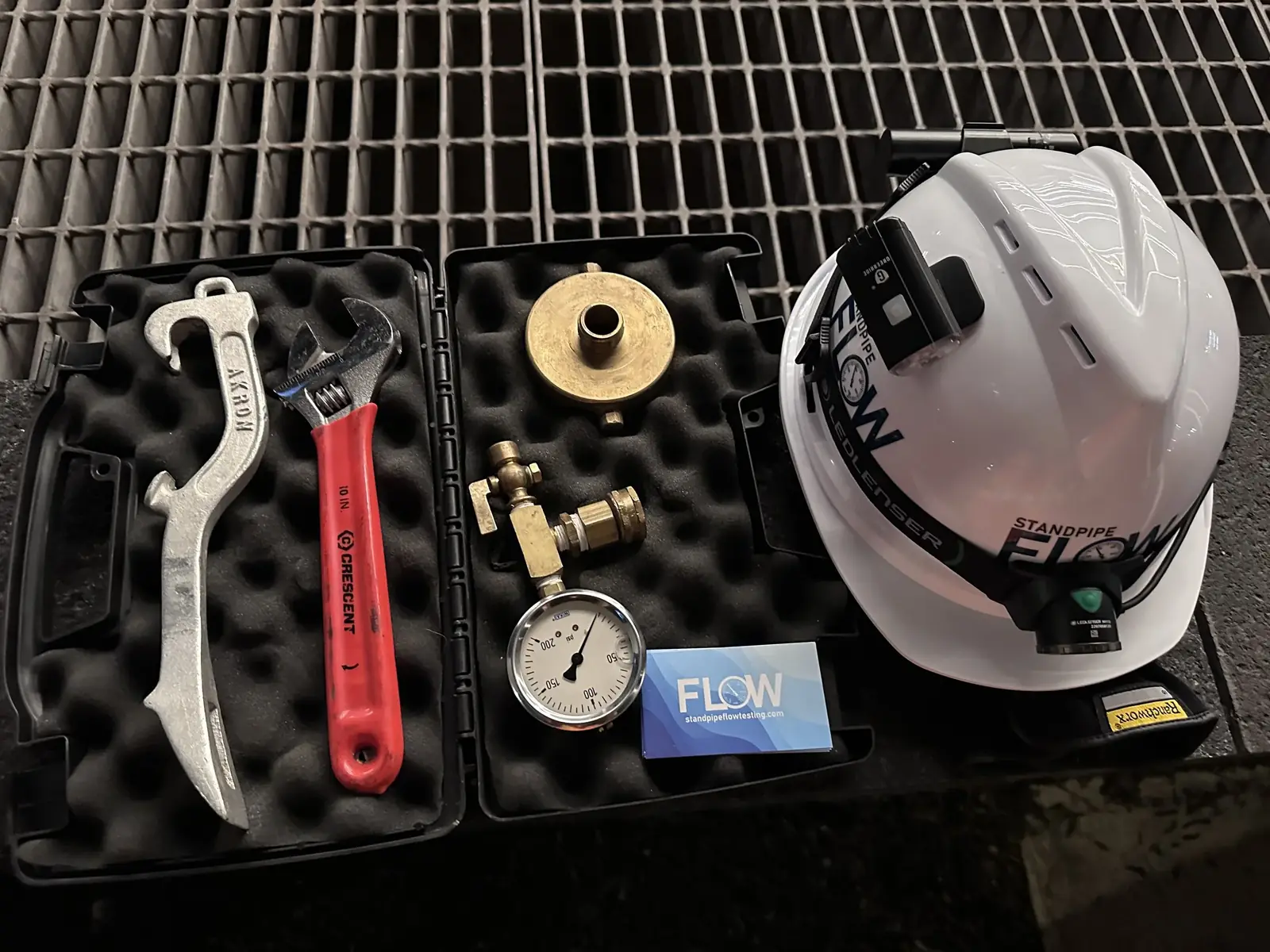
We work across Virginia, Maryland, Washington DC, North Carolina and South Carolina from our base in Richmond, VA.
FAQs
Does FLOW inspect or test fire sprinkler systems?
No. FLOW does not work on sprinkler systems. We support sprinkler and fire-protection contractors with water-side services: hydrant flow tests, standpipe flow and hydrostatic tests, fire pump flow tests, in-service tank inspections with a ROVr and bulk water.
What data does a hydrant flow test give a sprinkler designer?
Static pressure, residual pressure, and the flow in gallons per minute at that residual pressure. We also record the hydrant locations, date, time and test conditions. Designers use these points to plot the available water supply.
Can I use FLOW's flow test data in my hydraulic calculations?
Our hydrant flow test data is gathered for use in design and hydraulic calculations. Your designer and the AHJ decide how the data is applied and how recent it should be for your submittal.
Which NFPA standards apply to the water-side work FLOW does?
NFPA 291 covers hydrant flow testing. NFPA 14 covers standpipe systems. NFPA 25 covers inspection, testing and maintenance of water-based fire protection systems. Virginia uses NFPA 14-2019 and NFPA 25-2020. Confirm the adopted edition of each standard with your AHJ.
How does FLOW inspect water tanks?
We use an underwater submersible drone (ROVr) to inspect the tank. The tank stays full and in service. The ROVr records video of the interior, and you get the footage and a written summary of what we observed.
How do I schedule water-side testing for a project?
Request a quote online or text 804-426-1226 with the project location, the service you need, and your preferred dates.
Get water-side data for your next job
Need flow data, a standpipe or fire pump test, a tank inspection or bulk water for a pool fill? Request a quote, or text 804-426-1226. Texts only, please.