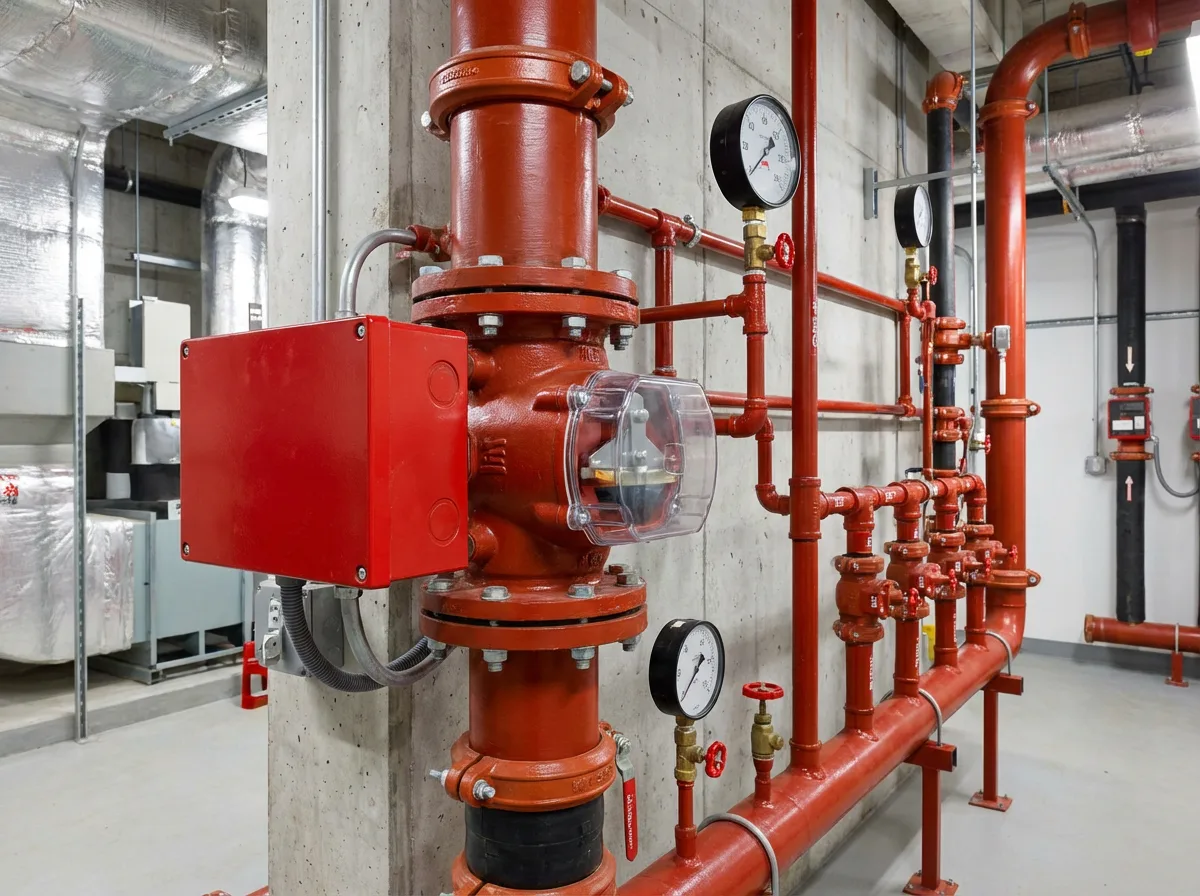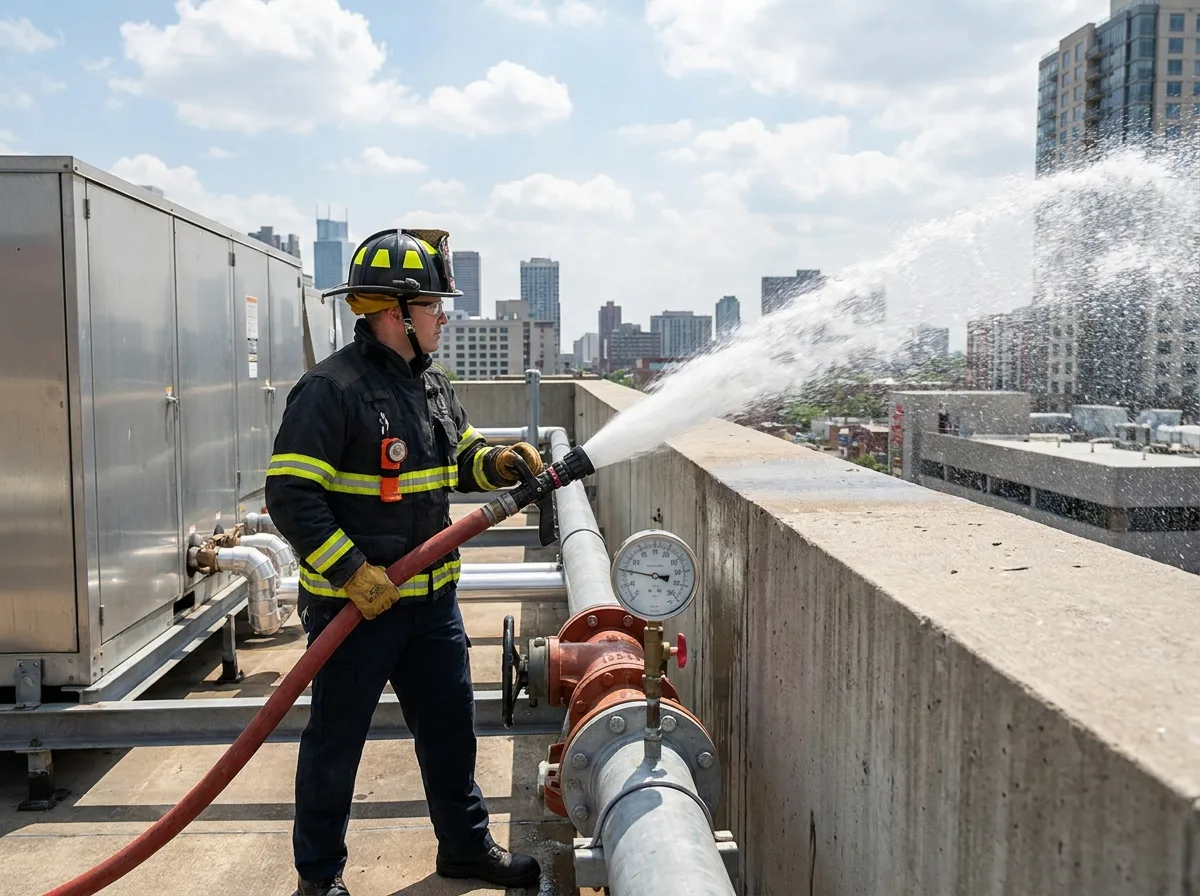
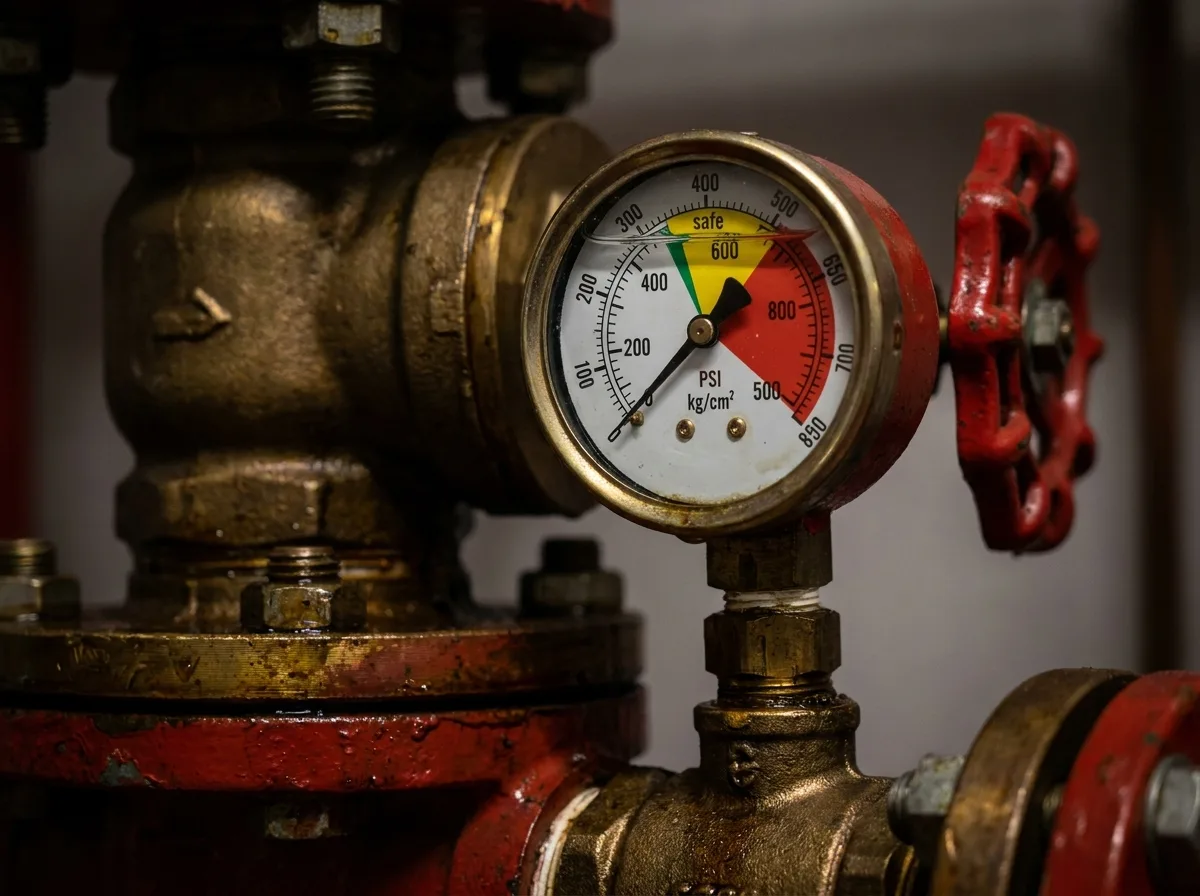
If you have ever signed off on a hydrostatic test without fully knowing what it was, you are not alone. The line item says "200 PSI for 2 hours" and most managers approve it on faith. Here is what you are actually buying, explained in plain language for the people who write the checks rather than read the gauges.
The simple idea behind the test
A hydrostatic test fills the fire protection piping with water and pressurizes it well above its normal working pressure, typically 200 PSI, or 50 PSI above the system's maximum working pressure if that is higher. Then it holds that pressure, usually for two hours, and watches the gauge. If the pressure holds steady and there are no visible leaks, the piping is sound.
You are stress-testing the pipe in a controlled way now, with clean water and an inspector watching, instead of discovering a weak joint during an actual fire.
Why water, and why so high?
Water is used instead of air because water is nearly incompressible. If a pressurized water line fails, it leaks and the pressure drops in a controlled way. A pressurized air line that fails can fail violently. Testing well above working pressure proves the system has a safety margin, it can handle pressure surges and years of service without springing a leak.
What a passing test tells you
- The joints, fittings, and welds were assembled correctly.
- There are no cracks, pinholes, or failed seals in the tested section.
- The piping can safely hold pressure above its normal operating range.
- New or repaired piping is ready to be put into service.
What it does NOT tell you
This is the part people miss. A hydrostatic test proves the pipe holds pressure. It does not prove the system delivers enough water and flow to fight a fire, that is what a standpipe flow test does. The two tests answer different questions. A building often needs both: hydrostatic to prove integrity, flow testing to prove performance. For the full picture of why both matter, read Why Test.
When you will need one
Hydrostatic tests are required on newly installed piping, after significant repairs or modifications, and on a recurring basis for dry and semi-automatic standpipe systems under NFPA 25 (NFPA 25 §6.3.2.1, commonly every 5 years; see the NFPA 25 frequencies and verify the adopted edition). Dry systems carry an additional obligation we cover in Dry Pipe Valve Trip Tests. If you are a manager approving the work, that gauge reading and the signed report are your documentation that the piping is sound, and your evidence at claim time, as we explain in Insurance Won't Cover What You Didn't Maintain.
Not sure which test your building is due for? Contact us and we will sort it out with you.