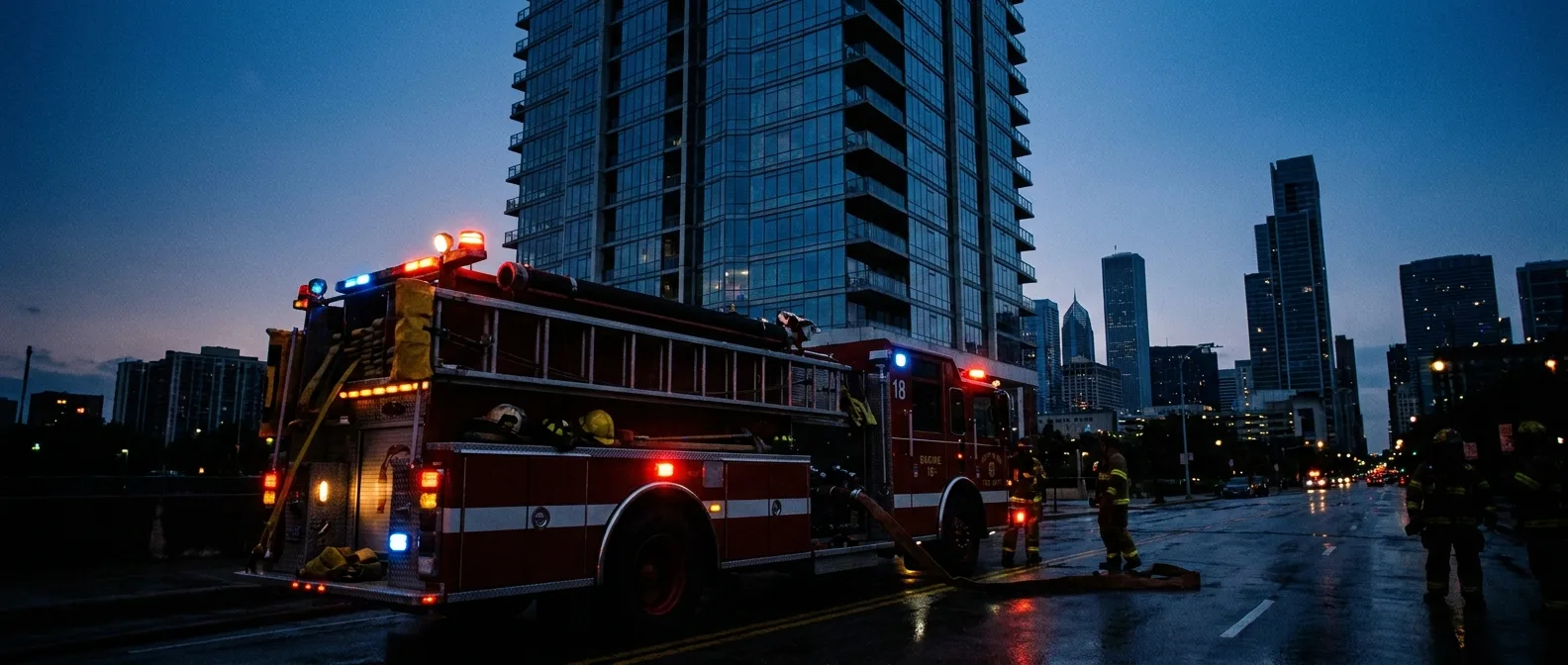

If you have never watched a standpipe flow test, the scope of it is surprising: a pumper truck, several hundred feet of hose, and a crew moving between the street and the top floor. Here is the whole day from the manager's side, so you know what to schedule and what to tell tenants. Related answers are in the Cost, Scheduling & What to Expect FAQ.
Before we arrive
- We confirm the number of risers, the system class and type, and the location of the FDC and the most remote outlets.
- You notify tenants and building staff, and we coordinate elevator or stairwell access.
- The alarm monitoring company is placed on test so a flowing system does not dispatch the fire department.
- If a hydrant permit or utility notification is required, that is handled in advance.
Knowing your class matters here, see Class I, II, and III Standpipe Systems Explained.
Setup (roughly the first hour)
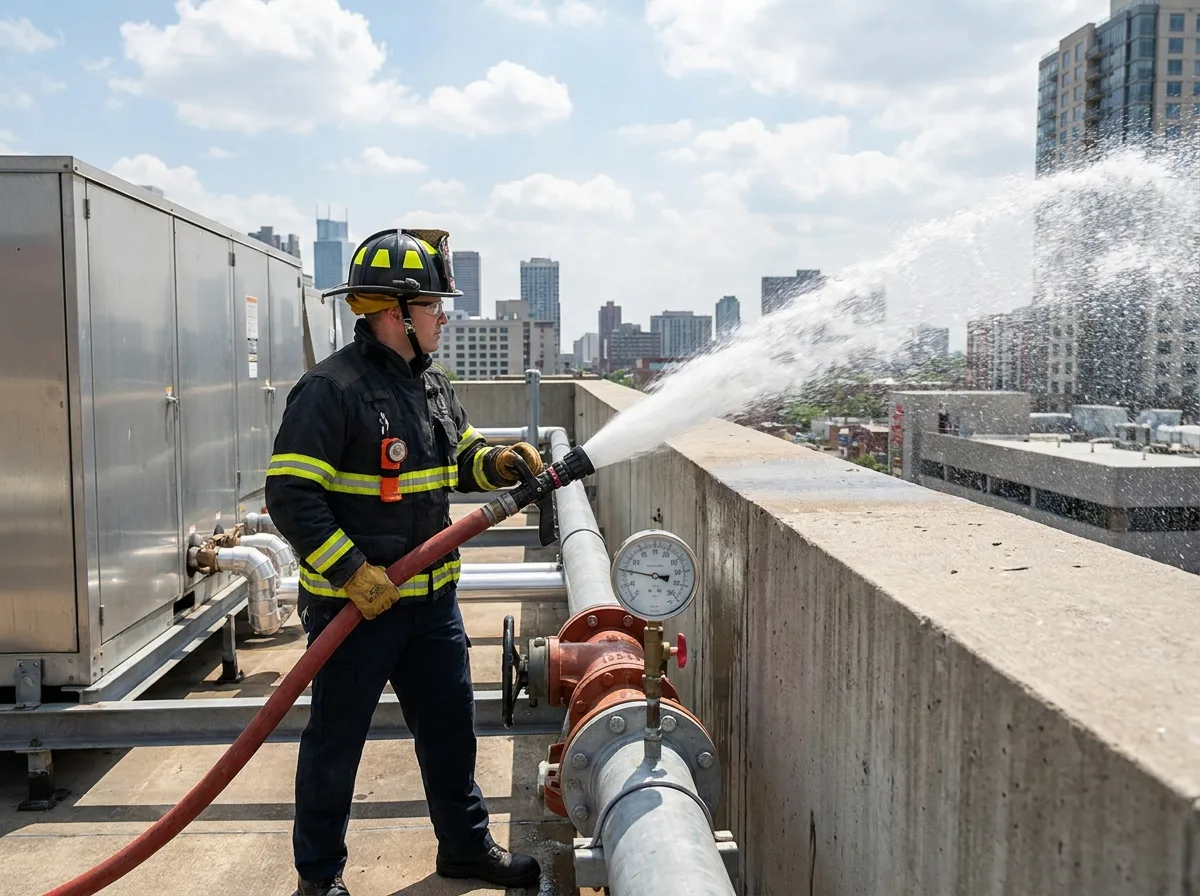
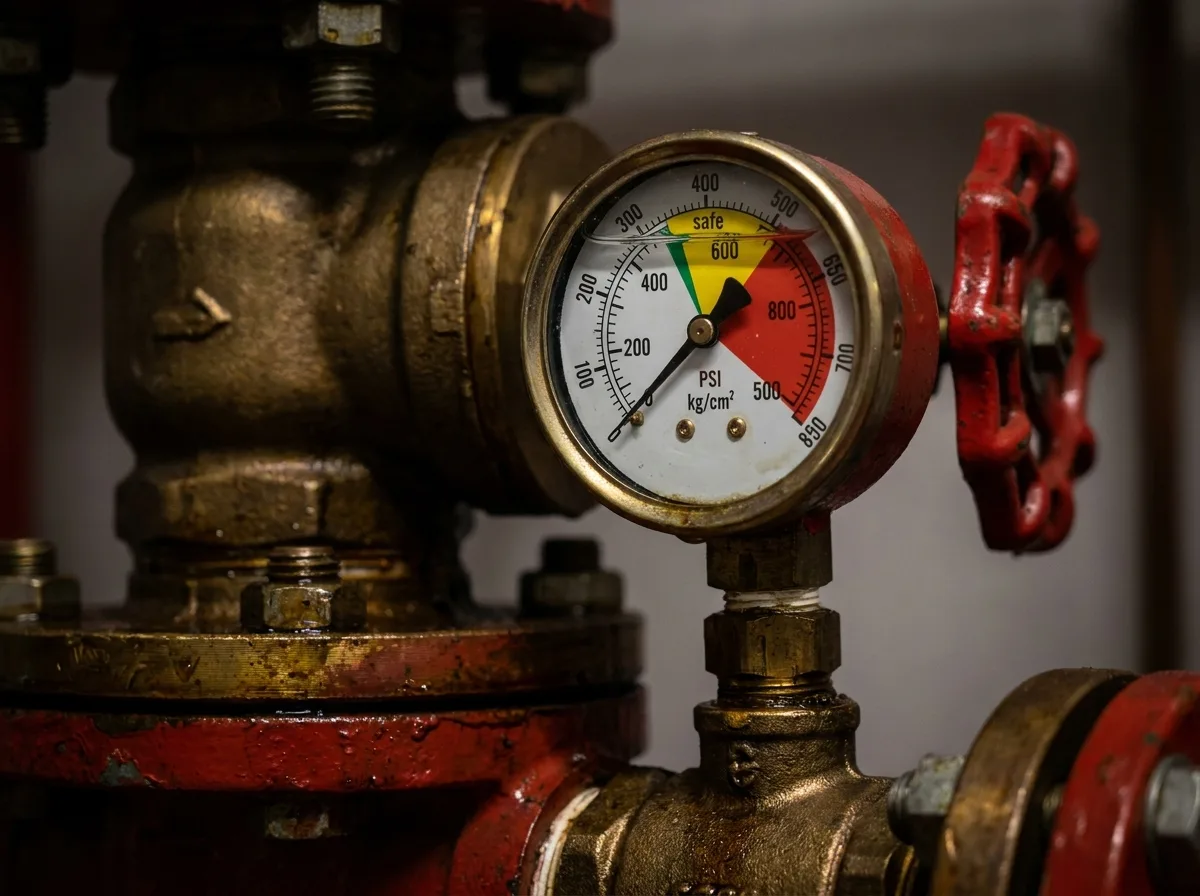
The truck sets up at the hydrant or FDC. Crew members run hose to the discharge point and to the hydraulically most remote hose valve, install calibrated gauges, and remove outlet caps. Air is bled from the line so the readings are accurate. Everything gets restrained, a charged 2½-inch line under pressure is not something you want loose.
The test itself
- Static pressure is recorded with no flow.
- Valves are opened gradually to avoid pressure surge.
- Flow is established and stabilized at the required rate.
- Residual pressure under flow is recorded at the most remote outlet.
- Readings are cross-checked and repeated as needed.
On a manual or dry standpipe we pump into the fire department connection exactly the way an arriving engine company would. That is the point: the test should mimic real fire-ground conditions, not a convenient shortcut.
The whole purpose is to reproduce what a fire crew would experience, same connection, same flow, same pressure demand, while an instrument is watching.
Where the water goes
Discharge is directed away from the structure, landscaping, and pedestrian areas, typically to a storm drain or an approved discharge point. On sites with containment or dechlorination requirements we plan that in advance. Expect a lot of water and a wet sidewalk for an hour, nothing more dramatic.
Restoring the system
Valves are closed in sequence, caps replaced, gauges pulled, alarm bypasses removed, and the monitoring company taken off test. We walk the riser to confirm everything is back in its normal position. This step is where careless crews create problems, so it gets a written checklist.
What you get
A signed report with measured static and residual pressures, flow rates, outlet locations, equipment used, conditions, and a pass/fail comparison against the code or design criteria. That document is what your AHJ, your engineer, and your insurance carrier will ask for, as we explain in Insurance Won't Cover What You Didn't Maintain.
If it fails
A failure is information, not a disaster. Usually it traces to a closed or partially closed valve, an underperforming water supply, a fire pump problem, or internal obstruction, the causes we catalogue in Top Reasons Standpipe Systems Fail a Flow Test. We document the result, tell you what we saw, and coordinate a retest once repairs are done.
Ready to put a date on the calendar? Request a quote and we will handle the coordination.