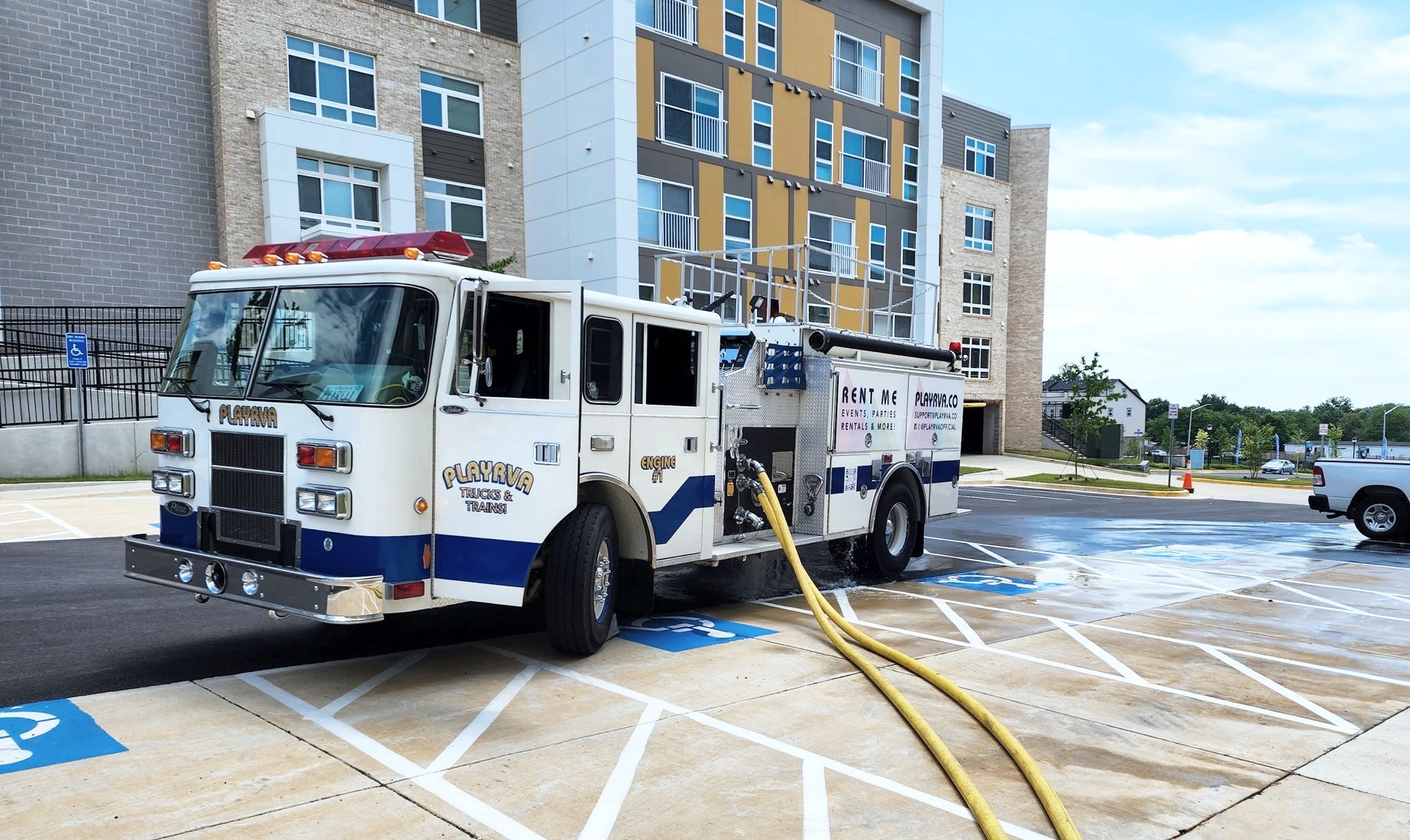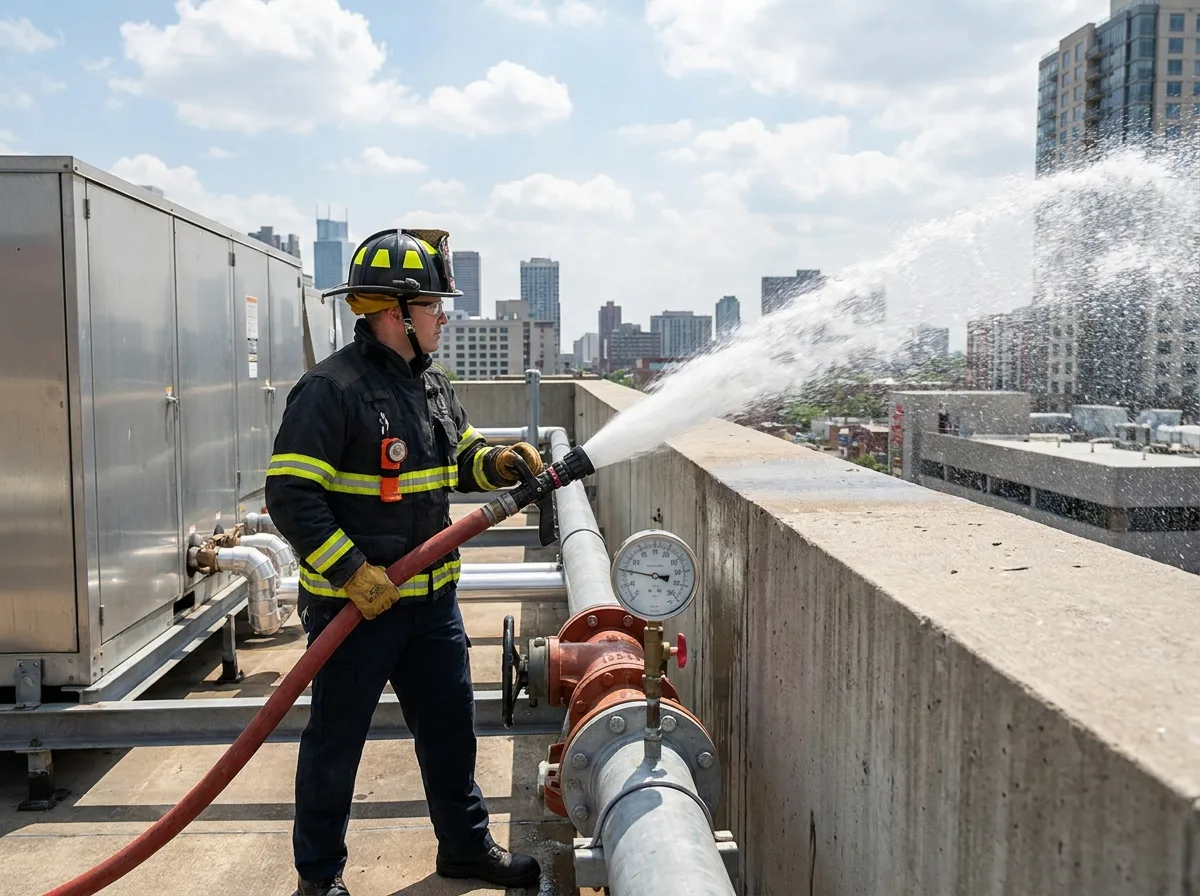
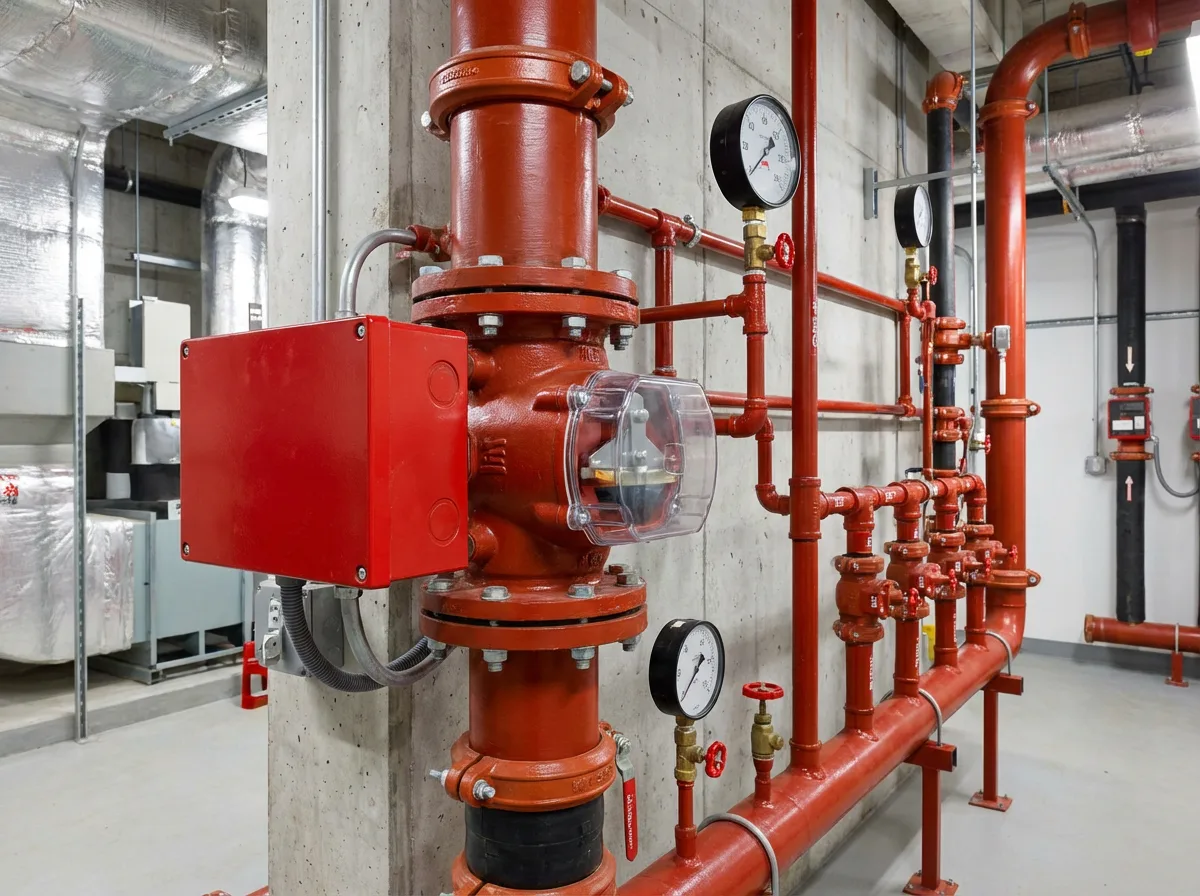
A standpipe that fails a flow test almost never fails for an exotic reason. After hundreds of tests, the same handful of causes come up over and over, and every one of them was silent until water moved. Here they are, ranked by how often we find them. For the question-and-answer format, see the Standpipe Flow Testing FAQ.
1. A closed or partially closed control valve
The number one cause, by a wide margin. A valve gets closed during maintenance or a renovation and never fully reopened. The system looks normal, the gauges look plausible, and then it cannot deliver flow. This is also one of the most common findings in real fire losses documented in our fire system failures database.
2. A fire pump that will not perform
On buildings that need a pump to hit their pressure, the pump is the whole ballgame. Controllers fail, batteries die on diesel units, transfer switches do not transfer, and churn tests get skipped for years. Regular pump testing catches it early, see Fire Pump Testing Explained.
3. A water supply that is no longer what the design assumed
The building was designed off a hydrant flow test from a decade ago. Since then the neighborhood added three hundred units and the main tuberculated. The system is fine; the supply is not. This is exactly the failure mode described in Hydrant Flow Test Data Is Perishable, and it is why a fire hydrant flow test often runs alongside standpipe testing.
4. Internal corrosion and obstruction
Tuberculation, scale, and biological growth narrow the effective diameter of the pipe. Flow drops even though nothing visibly broke. NFPA 25 requires periodic internal obstruction investigation for exactly this reason, and pipe flushing is often the remedy.
5. Construction debris
On new buildings, the failure is usually something that should never have been in the pipe: weld slag, gravel, a rag, a cutoff wheel. It parks itself at a valve or an elbow and chokes the system. Flushing before acceptance testing prevents most of these, which is why we push it up the schedule for contractors and developers.
Every one of these failures was invisible on a walk-through and obvious the moment water moved. That is the entire argument for flow testing.
6. Leaking or failed components
- Hose valves that will not seat, bleeding pressure during the test.
- Pressure-reducing valves set incorrectly or seized at the wrong setting.
- Check valves installed backward or fouled open.
- FDC check valves and clappers damaged or blocked.
- Backflow preventers adding more pressure loss than the design allowed.
7. A design that never worked
Occasionally the system was simply built to numbers it could not hit, wrong pipe size, missing pump, or a plan reviewed off optimistic supply data. This is the most expensive finding and the one most likely to surface at CO, with the cost stack described in The Hidden Cost of a Failed Flow Test at CO.
What to do about it
Test on the interval, flush before acceptance, keep the fire pump on its schedule, and pull fresh supply data before any design work. Then keep the reports, that paper trail is what protects the claim, as we cover in Insurance Won't Cover What You Didn't Maintain. Request a quote and we will find out what your building is actually capable of.