
A portfolio spread across five jurisdictions usually ends up with five different testing vendors, five report formats, and five different ideas about when the next interval is due. That is how buildings fall out of compliance without anyone noticing. Here is the case for consolidating. Coverage map: service areas.
The problem with per-building vendors
- Nobody owns the master calendar, so 5-year intervals quietly lapse.
- Report formats differ, so the compliance file is unreadable at claim time.
- Each vendor mobilizes separately, so you pay for travel five times.
- Scope creep hides: one vendor tests the most remote outlet, another tests whatever was convenient.
- When a building fails, no one has comparable data from the rest of the portfolio.
What consolidation actually saves
Mobilization is the biggest single cost driver in flow testing, and it is almost entirely avoidable in a clustered portfolio. Buildings in the DMV, Maryland, Washington DC, and Northern Virginia, sit inside one drive radius. The Carolinas cluster the same way: North Carolina and South Carolina on one Southeast route.
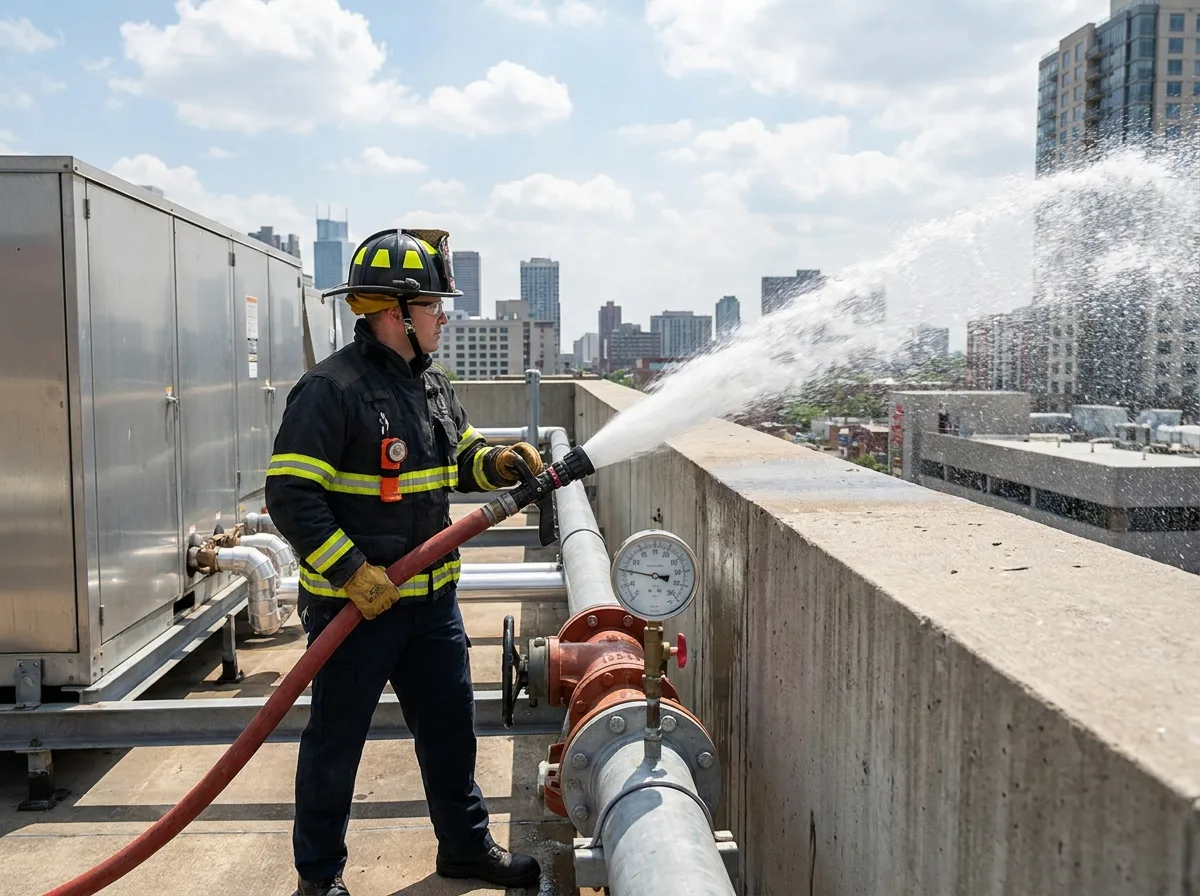
Bundling test types compounds it. A single mobilization can cover the standpipe flow test, hydrostatic test, hydrant flow test, and dry pipe trip test, and it resets every interval on the same clock so next cycle is one phone call. Cost mechanics in How Much Does a Standpipe Flow Test Cost?.
The cheapest test is the one that shares a truck roll with three others. The most expensive is the one nobody remembered to schedule.
One compliance file that survives a claim
When an adjuster asks for documentation after a loss, they want to see consistent, dated, signed records showing the intervals were met. A single vendor producing one report format across the portfolio makes that trivial. Five vendors and a shared drive full of PDFs does not, and that gap is exactly what carriers use to reduce claims, as described in Insurance Won't Cover What You Didn't Maintain.
Handling jurisdictional differences
Every state in our footprint adopts NFPA 14 and NFPA 25 through the I-Codes, but the local layer differs: DC Water permitting in the District, county amendments in Maryland, USBC specifics in Virginia, and active CO enforcement in growth counties across the Carolinas. One vendor working all five learns those differences once instead of five times. Each state's specifics are on its service area page.
How to start
Send a building list with addresses, riser counts, and the date of the last test if you have it. We will build a portfolio schedule, flag what is overdue, and group sites into efficient routes. Property owners and managers and fire protection firms both run this way with us. Request a quote to get the schedule built.