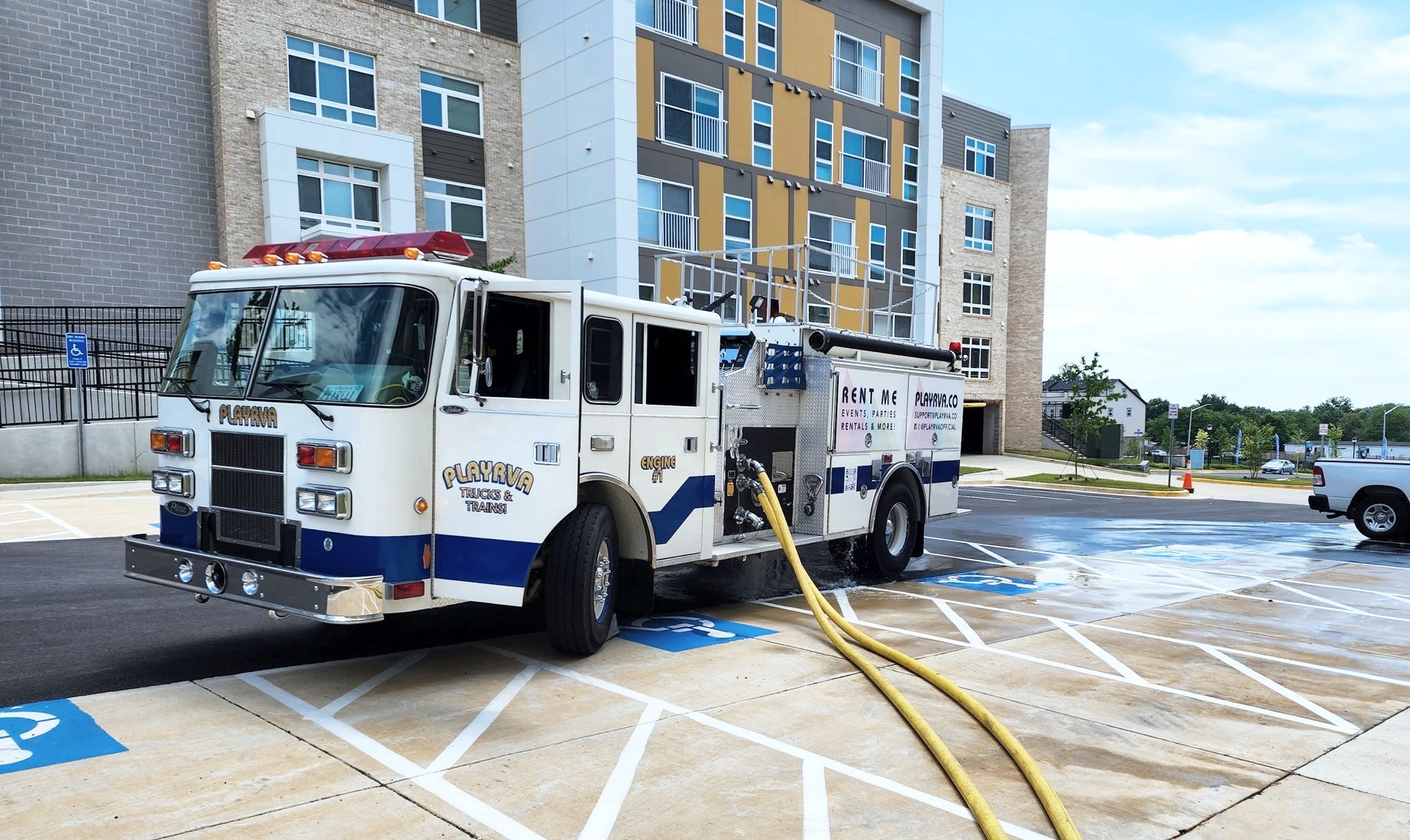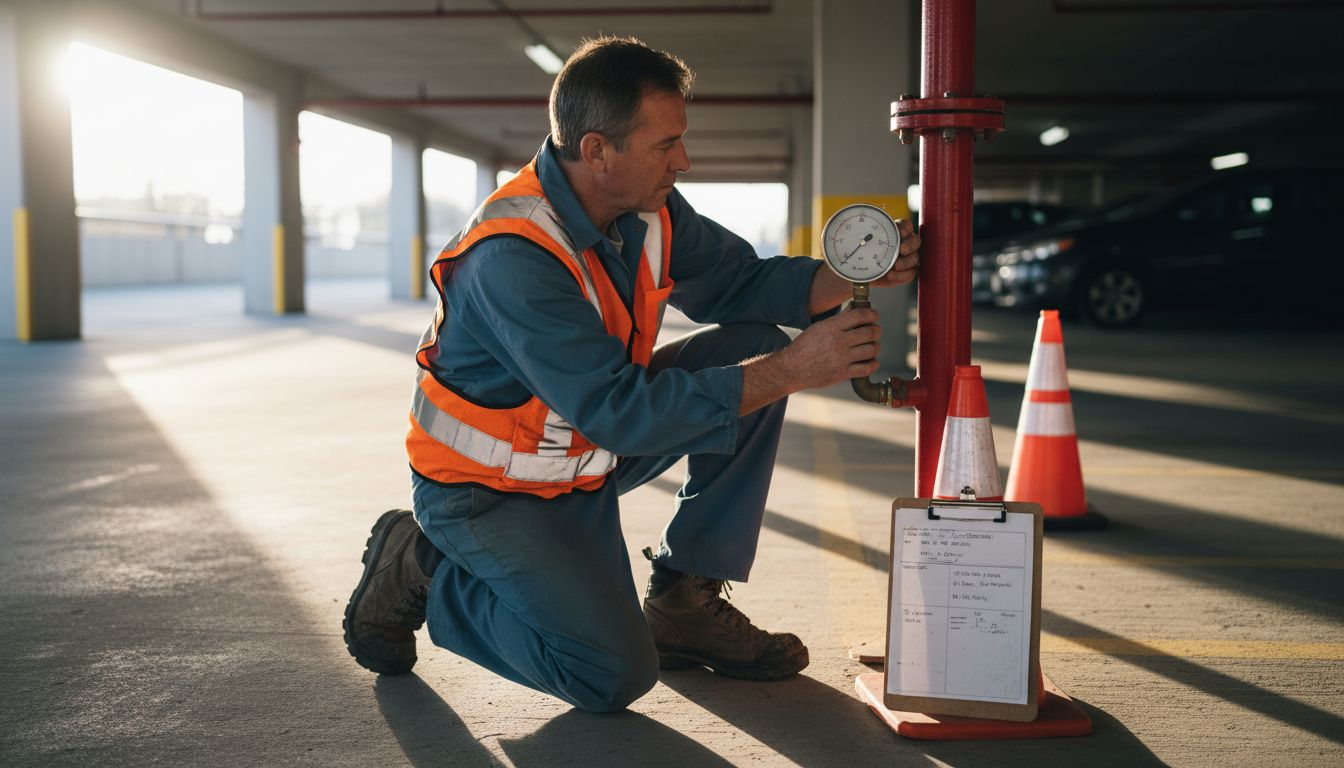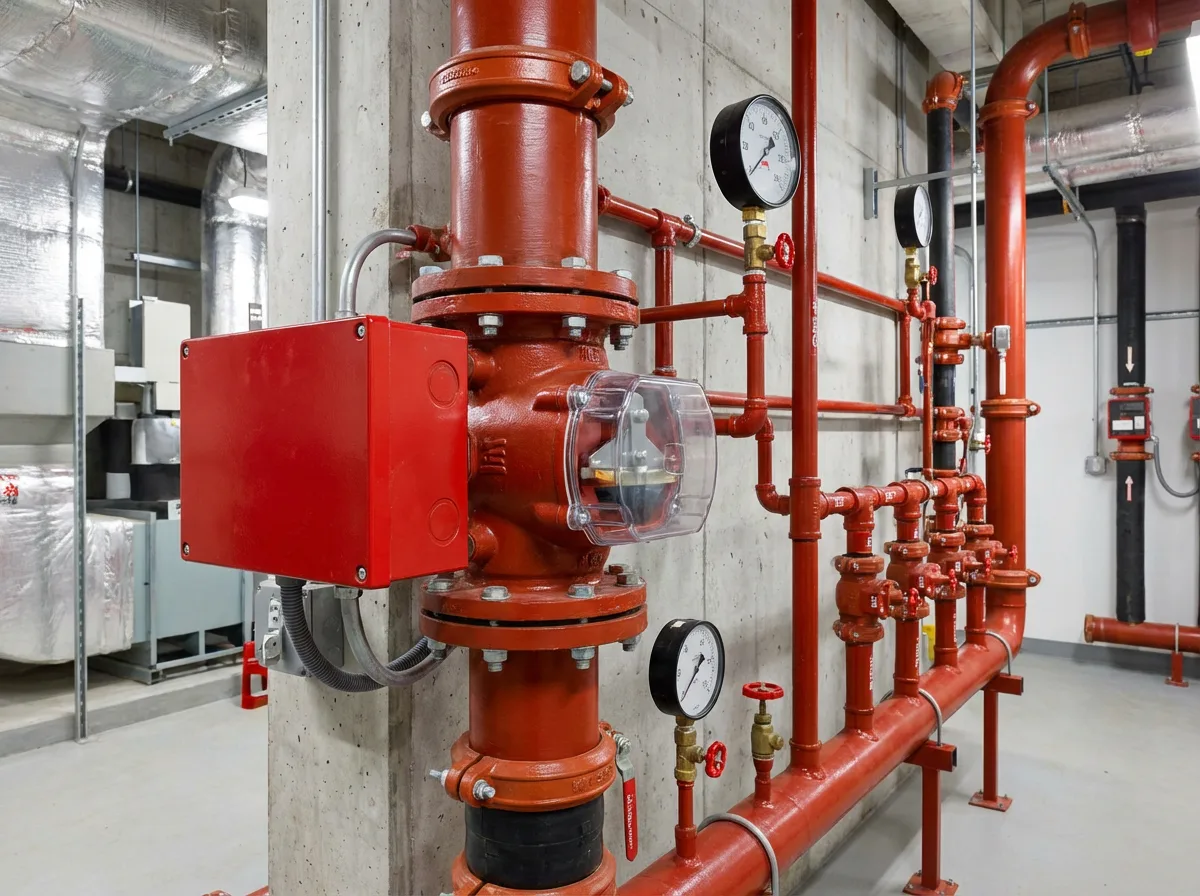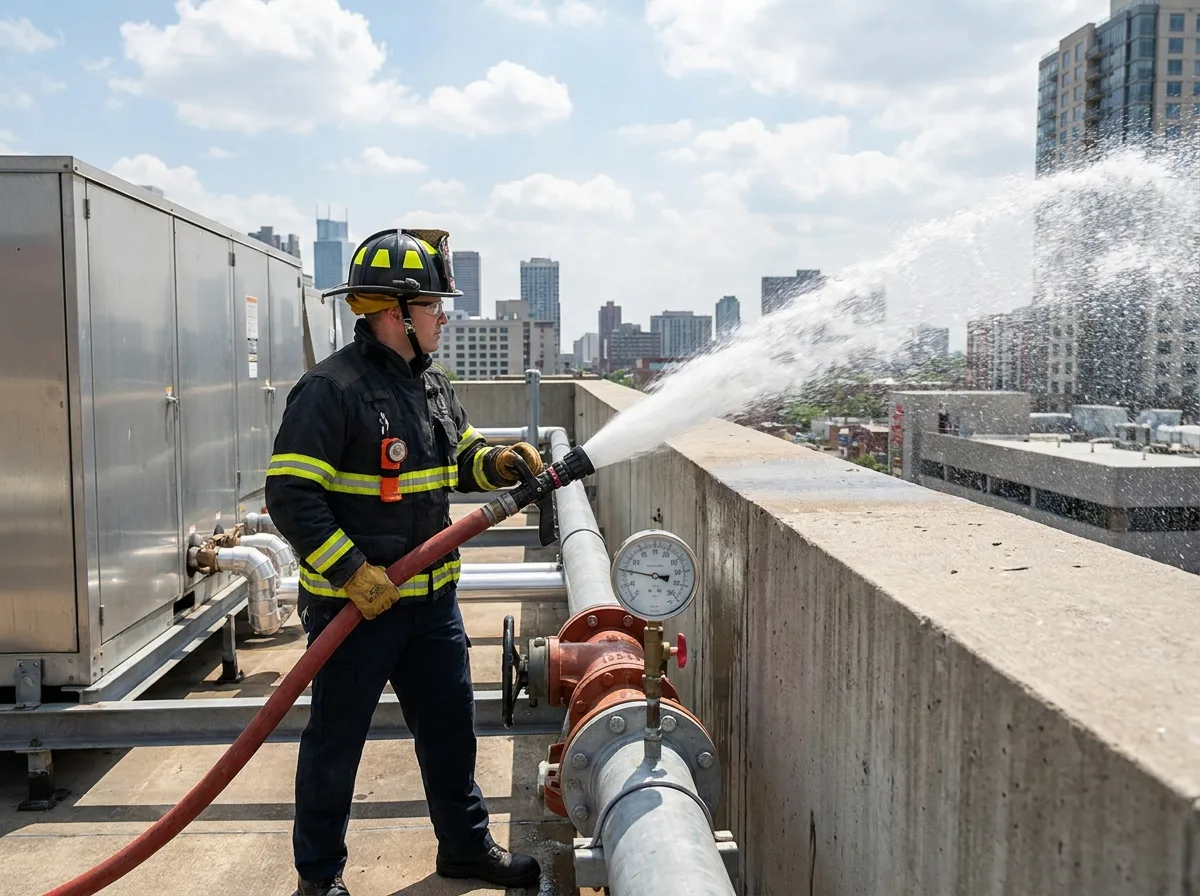
NFPA 14 tells you how a standpipe must be built and accepted; NFPA 25 tells you how often to prove it still works. The recurring obligation owners miss is the five-year standpipe flow test at the hydraulically most remote hose connection, not a visual check. Dry and manual systems also need a five-year hydrostatic test. Verify against the adopted edition.
If you own or manage a building taller than a few stories, there is a vertical pipe running up through it that firefighters are counting on. It is called a standpipe, and it exists so that a crew can connect a hose on the 14th floor instead of dragging 200 feet of line up a stairwell. The catch is simple: that system only works if it actually delivers water at the right pressure and flow when someone opens a valve. A standpipe flow test is how you prove it does, and this article walks through exactly what the code requires, what a proper test looks like, and the real reasons owners skip it (and shouldn't).
What the code actually requires
The two standards that matter are NFPA 14 (the installation standard, especially Chapter 11 at acceptance) and NFPA 25 (the inspection, testing, and maintenance standard, Chapter 6 for standpipes). NFPA 14 governs how the system is designed and installed; NFPA 25 is where the recurring obligations live. The headline requirement most owners trip over is the 5-year flow test: every five years, the standpipe system must be flow tested to confirm it can still deliver the minimum required pressure and flow at the hydraulically most remote hose connection (NFPA 25 §6.3.1.1). Verify against the adopted edition.
That is not a visual inspection. It is not someone walking the stairwell glancing at gauges. A flow test means actually flowing water from the most remote outlets and measuring the residual pressure under flow conditions, then comparing it against the design criteria the system was built to. If you are in Virginia, the installation side of this is adopted through the building code, we break that down in our piece on Virginia USBC Section 905.2.
- NFPA 25 5-year flow test: confirms pressure and flow at the most remote hose connection (NFPA 25 §6.3.1.1).
- NFPA 25 5-year hydrostatic test for dry and semi-automatic standpipes: confirms the piping holds pressure (NFPA 25 §6.3.2.1).
- NFPA 25 3-year dry pipe valve trip test: confirms water delivery time on dry systems (NFPA 25 §13.4.5.2.2.2 in the 2023 edition; older editions use §13.4.4.2.2.2).
- Annual inspections: valves, gauges, hose connections, signage, and supervisory devices. See the NFPA 25 inspection frequencies.
"The AHJ isn't enforcing it" is the worst reason to skip
We hear this constantly. The Authority Having Jurisdiction in your area may not be knocking on doors demanding flow test reports. That feels like permission to skip. It is not. Enforcement gaps are a budgeting convenience, not a legal shield, and they evaporate the moment something goes wrong. We cover what happens at claim time in Insurance Won't Cover What You Didn't Maintain.
A system that has never been flow tested is a system nobody has confirmed will work, and that fact surfaces at the worst possible moment, usually during an actual fire or an insurance claim.
The reason to test is not to satisfy an inspector. It is because a 20-year-old standpipe can develop closed valves, corrosion-narrowed piping, a failed fire pump, or a water supply that no longer meets the original design. None of those problems announce themselves. The flow test is the only thing that finds them before a firefighter does. If you want the broader argument for proactive testing, read Why Test.
What a proper test looks like
A correct standpipe flow test identifies the hydraulically most remote outlet, flows water from it (and often a second outlet to simulate demand), measures static and residual pressure, and documents the flow rate with a calibrated pitot or flow device. The result is a signed report comparing measured performance against the design or code minimum, typically 100 PSI residual at the most remote 2½-inch outlet for Class I and III systems (NFPA 14 §7.8). Verify against the adopted edition.
That report is what an engineer, an inspector, or an insurance adjuster will ask for. Without it, you are asserting your fire protection works. With it, you can prove it. The available water supply that feeds the system also matters, which is why a fire hydrant flow test is often run alongside standpipe testing on larger projects.
Who is responsible
Ultimately the obligation sits with the building owner (NFPA 25 §4.1.1), but it touches everyone in the chain. Property owners and managers carry the compliance risk. Fire protection firms often coordinate the testing as part of a maintenance program. Engineering firms rely on the resulting data for renovations and additions. When those roles understand the same requirement, nothing falls through the cracks.
Bottom line
Standpipe flow testing every five years is not red tape. It is the difference between a documented, functioning life-safety system and an expensive assumption. If your building has never had a flow test, or you cannot put your hands on the last report, that is the signal to act. Request a quote and we will tell you exactly what your system needs and when it is due.